Currently reading bell hooks (1994): “Teaching to transgress. Education as the practice of freedom”
I finished reading bell hook’s book “Teaching to transgress. Education as the practice of freedom” a couple of weeks ago, and a sentence very early on resonated with me so much: “The classroom remains the most radical space of possibility in the academy“. Yes, that’s why my job is so important! When I read that sentence, I knew I had to read the whole book, and read it carefully. And I see so many new possibilities for my own practice!
First, I am rethinking academic publishing. The system has been broken for a while with a focus on producing more and more faster and faster and a peer review system that cannot keep up, but so far I have bought into the “it might be broken, but it’s the best we have” narrative. I don’t really know why; typically I very easily go to “then let’s scrap it and make something better!”. But bell hook’s discussion of publishing really opened my eyes. She writes “… my decisions about writing style, about not using conventional academic formats, are political decisions motivated by the desire to be inclusive, to reach as many readers as possible in as many different locations“. And I can confirm — the book is easy and even entertaining to read! I have been putting off reading it for such a long time exactly because I expected it to be heavy and academic and theoretical and thus to be either really hard work or to make me feel inadequate for not being able to just easily read it. But none of that was true! I loved the format of the book, with lots of essays and even including conversations — even one between the author as their real self and as their pen name, bell hooks. Why stick to traditional formats if they don’t serve your purpose (especially when on a permanent position)? The “political decisions motivated by the desire to be inclusive, to reach as many readers as possible in as many different locations” resonates with me so much! But of course, it is a decision that comes with consequences, as bell hooks discusses: If something isn’t published in a traditional academic format, other people might not see it, or be allowed to use it, as a legitimate academic source. And it won’t count on a CV in the same way a peer-reviewed paper would. But she also describes how people in prison read and discuss her writing and use it “to unlearn sexism“, and how could a traditional publication ever have that impact? Of course it doesn’t have to be an either/or, but I think who will be able to read something (both in terms of open access but also of way that language is used) should be the very first consideration when wanting to write about something!
I also really liked the discussion of the role of theory; to see theory not as contrast to action but as action itself, and as a “location for healing”. I mentioned that yesterday in the context of real-world experiences of topics in health education, and I think it is such an important framing. We don’t teach theory as something that is disconnected from the real world or the practice, we teach it to make sense out of the real world and the practice, in order to be able to change it.
And of course, even though not in those terms, bell hooks makes it really apparent that we need to think about intersectionality: feminism and race are not unrelated discussions, even though for different people from different contexts one or the other might seem much more urgent than the other. But we need to understand injustices as interconnected and needing to be worked against in an integrated way, even though it is hard work to acknowledge that others’ struggles might be as important as ones owns. But “Confronting one another across differences means that we must change ideas about how we learn; rather than fearing conflict we have to find ways to use it as catalyst for new thinking, for growth“.
Generally, I love the focus on growth. Discussing Freire’s sexism in at least his earlier works and how frustrating that limited perspective is, bell hooks writes “And yet, I never wish to see a critique of this blind spot overshadow anyone’s (and feminists’ in particular) capacity to learn from the insights“.
Relatedly, what really struck me in the book is the concern and compassion for teachers. Despite writing that “The classroom remains the most radical space of possibility in the academy” and describing all the work that urgently needs doing, bell hooks acknowledges how difficult this work is. “Among educators there has to be an acknowledgement that any effort to transform institutions so that the reflect a multicultural standpoint must take into consideration the fears teachers have when asked to shift their paradigms. There must be training sites where teachers have the opportunity to express those concerns while also learning to create ways to approach the multicultural classroom and curriculum“; “…there must be a setting for folks to voice fears, to talk about what they are doing, how they are doing it, and why. […] Hearing individuals describe concrete strategies was an approach that helped dispel fears. It was crucial that more traditional or conservative professors who had been willing to make changes talk about motivations and strategies”
But even though both classroom and curriculum are mentioned together in the quote above, bell hook describes what happens in the classroom as being much more important than what is written in the curriculum. “different, more radical subject matter does not create a liberatory pedagogy, […] a simple practice like including personal experience may be more constructively challenging than simply changing the curriculum. […] sharing personal narratives yet linking that knowledge with academic information really enhances our capacity to know” (my emphasis because I want to be able to find this quote without reading the whole post…)
In this context, I am also thinking about bodies in the classroom, about embodied learning. We have been trained to think about academics as “just brains”, and even just stepping out from behind the desk as a teacher can feel vulnerable. In one of the interviews, someone highlights that when we walk between students, they can even smell and touch us (or maybe they wrote only about touching and I made up the smelling?) In any case, we become a body connected to our brains, and that can be very uncomfortable!
One way I have experienced the discomfort of also being a body is sitting in a circle in learning situations. bell hooks writes that “the change [from sitting in a lecture theatre style to in a circle] forced us to recognize one another’s presence“, and her interview partner, Ron Scapp, writes about students: “They see this practice as an empty gestude, not as an important pedagogical shift“. YES! I know that I have always hated sitting in a circle (even worse if we have to sit so close that knees are touching!!) and that happened both when I was studying towards my Master of Higher Education and in other “soft skill” courses. I felt that taking away the table I was used to sit at was taking away security (plus a place to comfortably have my note book), and only decades later I get the point of why this might have been a good idea back then. bell hooks writes about how learning takes time, how former students who were vocal about not liking a class while taking it sometimes came back years later to say that they actually learned something, so it is not just me… (Although I feel that this is something that could probably have been explained and then I might not have hated it quite as much)
This also fits with the experience that Eriksson et al. (2022) describe in the context of eco emotions, where students report back about how the course became more meaningful after having spent time in their home country, away from the university, and another important factor in learning, in addition to time, is the occasional distance from the classroom (even just breaks like Christmas or summer), which can change how people relate to content. bell hooks suggests to “ask them to share with us how ideas that they have learned or worked on in the classroom impacted on their experience outside. This gives them both the opportunity to know that difficult experiences may be common and practice at integrating theory and practice: ways of knowing with habits of being. We practice interrogating habits of being as well as ideas. Through this process we build community.“.
Another way to build community is to meet students on their turf, for example during lunch breaks, and that is important: “some version of engaged pedagogy is really the only type of teaching that truly generates excitement in the classroom, that enables students and professors to feel the joy of learning”
Speaking of pedagogy: I find it really interesting and insightful to see the strategies that bell hooks uses to navigate difficulties in the classroom.
About balancing different ways students have personal experiences to relate to the topic at hand, she writes “If I do not wish to see these [students from marginalized groups] use the “authority of experience” as a means of asserting voice, I can circumvent this possible misuse of power by bringing to the classroom pedagogical strategies that affirm their presence, their right to speak, in multiple ways on diverse topics. This pedagogical strategy is rooted in the assumption that we all bring to the classroom experiential knowledge, that this knowledge can indeed enhance our learning experience. If experience is already invoked in the classroom as a way of knowing that coexists in a nonhierarchical way with other ways of knowing, then it lessens the possibility that it can be used to silence.“, “…I assign students to write an autobiographical paragraph about an early racial memory. Each person reads that paragraph aloud in class. Our collective listening to one another affirms the value and uniqueness of each voice. This exercise highlights experience without privileging the voices of students from any particular group. […] Since this exercise makes the classroom a space where experience is valued, not negated or deemed meaningless, students seem less inclined to make the telling of experience that site where they compete for voice“. I think this is also great advice when it comes to what I wrote about yesterday — both discussing experiences with social class and, more generally, having students in class that somehow embody the topic of the class.
In response to changing plans during a lesson in response to students seeming bored or disengaged, bell hook writes: “One of the most intense aspects of liberatory pedagogical practice is the challenge on the part of the professor to change the set agenda” — we need to cultivate quite a wide corridor of tolerance! And “maybe the material I most want them to know on a given day is not necessarily what learning is about. Professors can dish out all the right material, but if people are not in a mind to receive it, they leave the classroom empty of that information, even though we may feel we’ve really done our jobs“. This might be one of the most important things I learned in my Master of Higher Education: Disruptions take precedence; disturbances need to get priority treatment! However elsewhere, she writes about how she brings students back on topic by interrupting and saying that what they are talking about is interesting, but to please explain the relevance to the topic at hand… So it is quite a delicate balance to keep students on topic but keep the topic flexible enough to stay meaningful!
Lastly, I find it empowering to read how she insists on limits to class sizes in order to be able to do liberatory pedagogical practices. “Overcrowded classes are like overcrowded building — the structure can collapse“. Not everything can be scaled — in the image that her interview partner uses: no matter how awesome the cleaning personnel, if there is only one bathroom for too many people, at some point the plumbing won’t keep up. And the same is the case for education. While we want to welcome all students that want to take a class, there is a limit to how many we can accommodate without the class becoming drastically less meaningful. That is such an important reminder; while good methods can get us far, there is a limit to that and at some point we need to remember that the main feature of getting a university education is to learn from and with other people, and for that there needs to be some kind of personal relationship with the teachers. Especially if we want the classroom to remain the most radical space of possibility in the academy!
Hooks, B. (1994). Teaching to transgress. Education as the practice of freedom. Routledge.
Featured images from a really short walk in early March that left me feeling so recharged and reenergized. This is always a great wave watching place!

Always inviting — stairs into the water!

Could watch this forever!

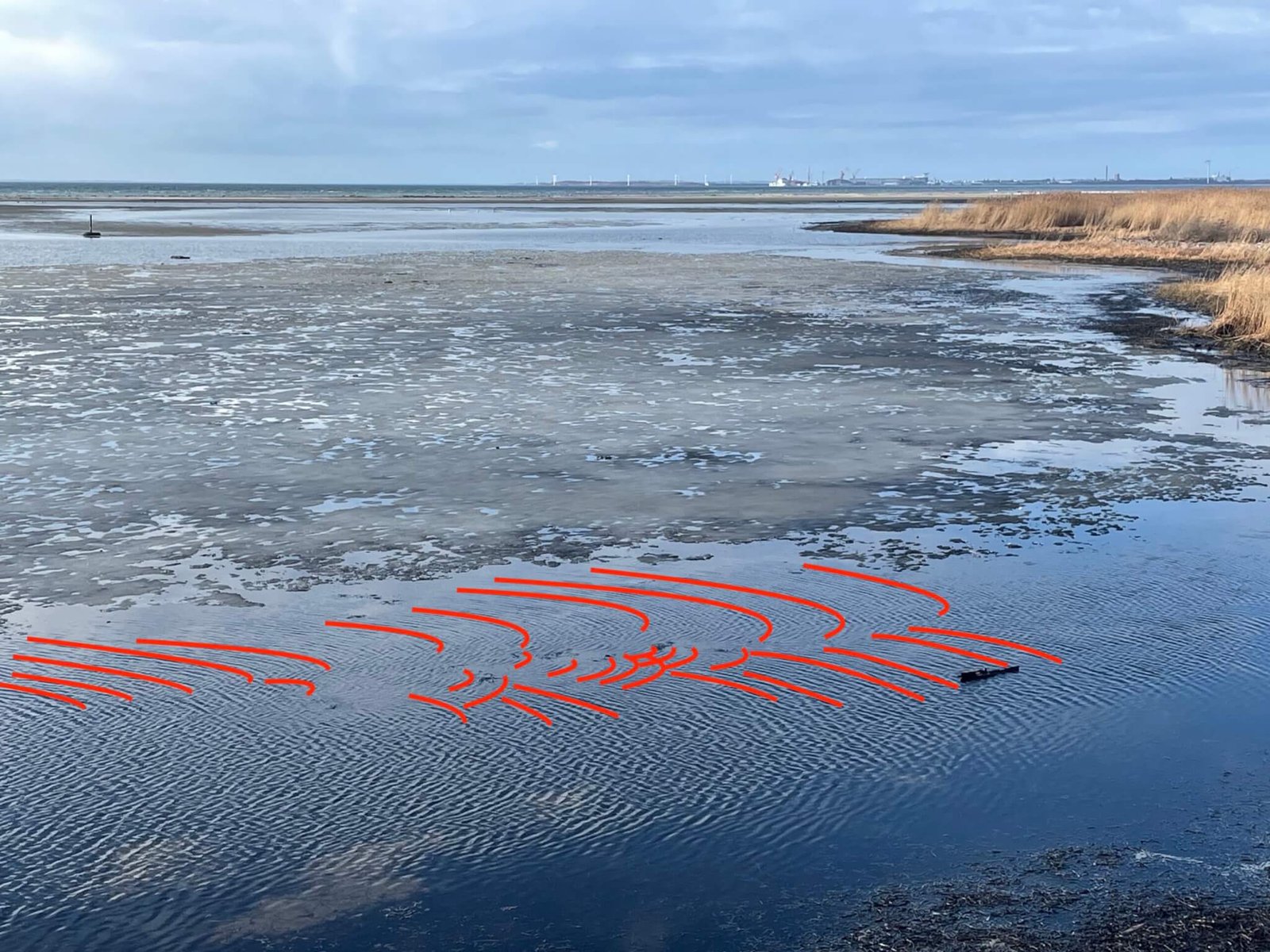
Also nice to see really long wave crests in shallow water.

But also fun when the water is gone!

And when the sun peeks out

Isn’t it beautiful?

Back when there was still ice on Öresund! And look at those wind waves!

Waves are awesome!