
Currently reading Osborne et al. (2026) on “Learning about personally relevant topics in health professional education”
Even though I have nothing to do with health education whatsoever, this article really sparked my interest. Osborne et al. (2026) “highlight the importance of recognising that any aspect of curricula which explore human experience may overlap with students’ lives“, and that should be the case also in all of my teaching (see my thoughts on discussing social class just now) and in a lot of teaching of sustainability-relevant content! So what can we learn from health education?
The first thing that jumped at me is the concept of the “implied student“, the implicit assumptions in who our students are and what success looks like that manifest in how we teach: “teaching practices, disciplinary norms and course content collectively build a picture of: who students are assumed to be; what students are assumed to embody, know and believe; and how they are assumed to study. Students who fit the model of the implied student go about their study in such a way that they are likely to be seen as ‘recognisable as a competent student’ to others in their disciplinary area“. The most obvious way that the implied student becomes visible is when some people are just not considered in planning, e.g. by materials or buildings being obviously inaccessible to some. But also by the way we talk about culture, like the one here is the norm and everything else is weird. Or, as an example that Osborne et al. (2026) describe, when the students in a class are used as reference point of being non-disabled.
In their study, interviewing a bunch of health students on how their personal lives overlap with their professional learning, they find many instances where some facet of their identity or experience is addressed as a topic in ways that are problematic. For example, talking about how having one disease isn’t even as bad as another disease these days, but what does that say to students who have the other disease? Or asking “what do these people die of?” when people in the room have that same illness, or not considering that people might have loved ones that died from the same conditions that are shown in class. When students have shown emotional reactions, they fear that they aren’t perceived as competent. The implied student here is someone who is neutral, without personal connection to, or emotions about, the topics. And sometimes personal experiences are being silenced — directly by dismissing them as irrelevant, or indirectly, by reducing the complexity of a conditions so it becomes too abstract to relate to. When students feel shut down, they tend to “slowly check out”: “Participants often framed withdrawal as a survival strategy for retaining some control and rationing energy, while also noting these harms to their academic, social and mental wellbeing.”
But Osborne et al. (2026) also describe positive experiences that students reported on, like being acknowledged in both the role as someone who has the personal experience and the professional who would appreciate the theoretical discussion. “Caring lecturers were able to step into a bridging role, using their clinical expertise to acknowledge participants as both students and people managing intersecting life experiences.” Topics that were personally relevant, could be especially engaging if they helped theorise and contextualise personal experiences (both students’ own and of their loved ones). The authors relate this to bell hooks’ description of “theory as a “location for healing”“, which reminds me that there is still a summary waiting to be written, as I newly discovered bell hooks as hugely inspiring!
One other thought that I found really important was that “When teachers were open to students’ first-hand input in academic settings, this openness signalled that having experiences that intersected with the curriculum was compatible with being a health professional.” For students who are looking to understand a professional role, to become a professional, this must be so important!
Osborne et al. (2026) suggest that “recognising higher education as an embodied space is an important place to start to avoid doing harm through our teaching“. But before that can happen, a lot of work has to be done by the teachers, who also need to understand “their own situational and embodied locatedness as human beings in relation to course content, the world and students“, and that students will relate differently to course content; with very different personal backgrounds and experiences.
Teachers need to also balance selecting and simplifying content with presenting enough complexity that lived experiences aren’t minimized or silenced. Osborne et al. (2026) suggest two ways to do that, based on what was said in the interviews:
- “maintain complexity in relation to the content taught“, by including multiple voices and perspectives, including accounts of people that are directly affected themselves, or their families, to show that even if the teacher might not bring in the students’ own perspectives, other perspectives are valued. Another approach is “contextualising inequities by discussing their causes, including historic and current manifestations of colonisation and racism“, and how the very system into which the students are growing professionally has contributed to this. A third way is by “naming and describing privilege rather than solely focusing on marginalisation” (which I find also helpful in relation to what I just wrote earlier about social class!). A fourth way is to “include explicit teaching on how inequities could be improved” (which I also really like!)
- “expressing care for students as people and consideration for students’ desires to bring their own experiences and perspectives into their learning“, by acknowledging that they might simultaneously be a professional and someone with lived experiences, inviting (not forcing!) students to share if they wish, and normalizing help-seeking behaviour
Wow! My gut feeling was correct, this is a very helpful article even for people that do not work on health at all! I think all these considerations and all the advice work the same way for other topics, too, and I especially really like the advice on naming and describing privilege, and how maintaining privileges works to upkeep inequalities.
Osborne, E., Anderson, V., & Robson, B. (2026). Learning about personally relevant topics in health professional education. Higher Education Research & Development, 45(2), 403-417.
Featured image and pics below from a very windy walk over Easter.

Very awesome wave watching!

And the sun came out!
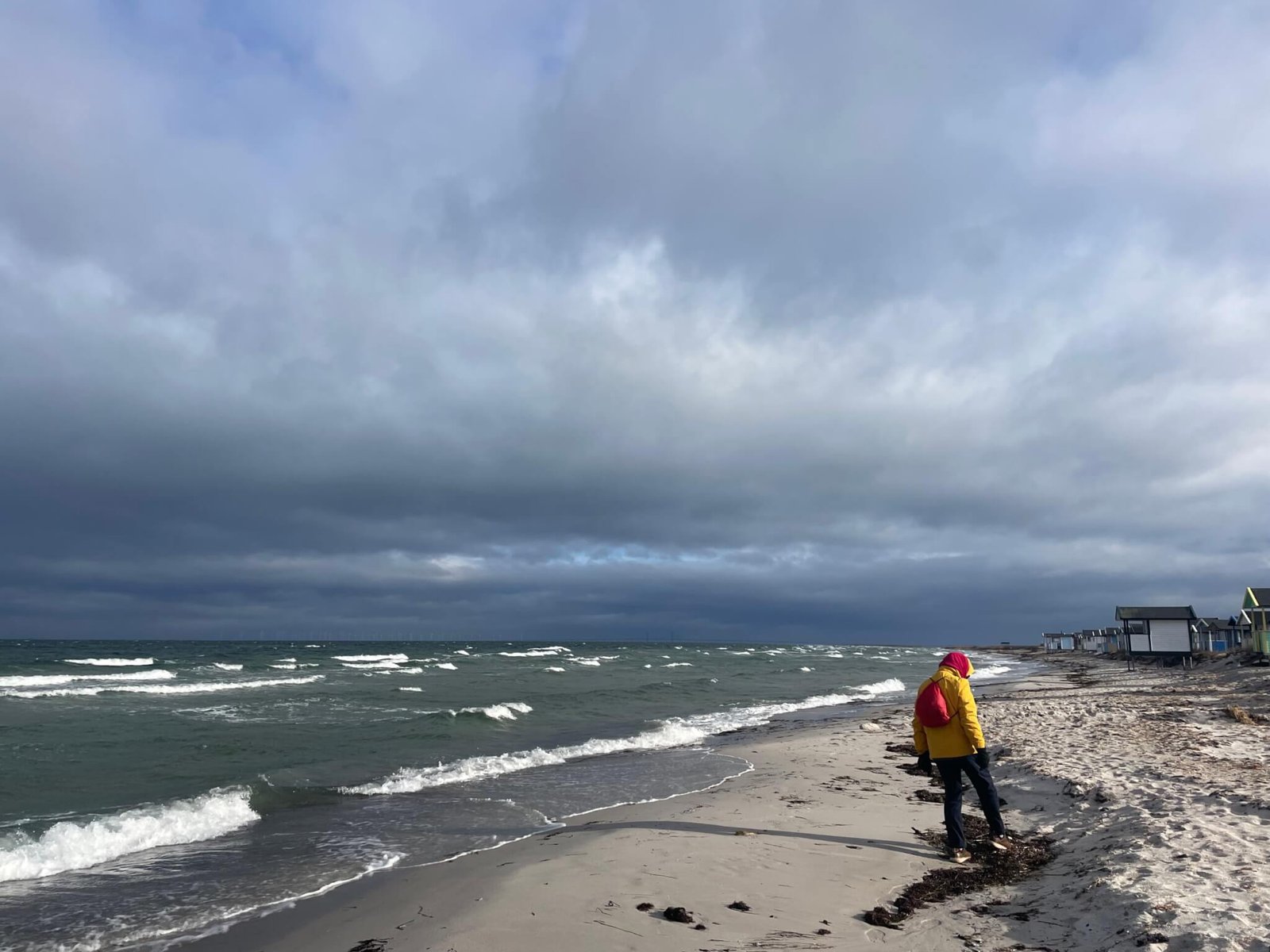
Always fascinating to see coastal erosion in action!

Love waves!!

Especially breaking waves

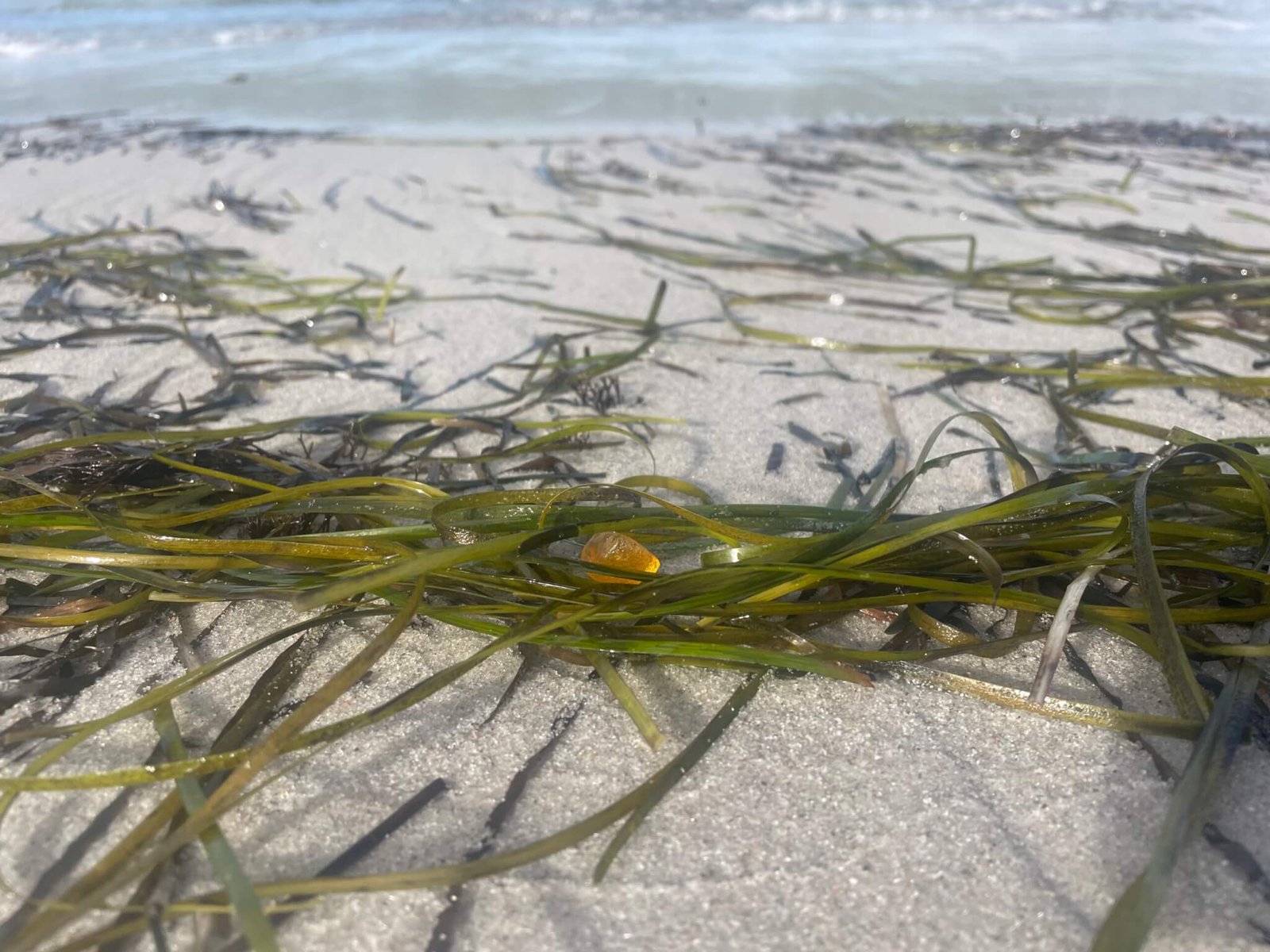
Found a little piece of amber!
Fascinating how the color of the sea changes!

And how different waves can look

Can you see how windy it is if we have all these small waves on top of the larger waves?

So many waves!

And so many structures on all kinds of scales!

Also interesting: How these little strings act as wind vanes!

Look how green the sea is now!

And how dark the horizon gets!

I think I love the green even more than the blue

I could watch this forever!

Nevertheless, this is the last picture for today…



Addressing sustainability in a fact-based, normative or pluralistic way? - Adventures in Oceanography and Teaching says:
[…] Lastly, it is important that teachers don’t trample into topics without having considered that some students might be very much personally affected by those topics, due to experiences or just compassion. I think I need to write something about trauma-informed teaching soon, but for now it’s a good start to look at the recent post about teaching personally-relevant topics in health education. […]
Currently reading bell hooks (1994): “Teaching to transgress. Education as the practice of freedom” - Adventures in Oceanography and Teaching says:
[…] as action itself, and as a “location for healing”. I mentioned that yesterday in the context of real-world experiences of topics in health education, and I think it is such an important framing. We don’t teach theory as something that is […]