
Thinking about relationships and trust
Didn’t feel like I had time to go for a morning dip, but made the time and am glad I went, both because that’s always awesome and because it gave me the chance to listen to the episode “How college students make, keep and lose friends with Janice McCabe” on one of my alltime favourite podcasts, Teaching in Higher Ed!
I recently read about a study where they found that these days, people in their twenties in Sweden are more lonely than those 80+ years old, when historically young people are well-connected and positive about the future. But maybe the pandemic influenced them during a formative time so that now it is much more difficult for them to build relationships. In the podcast episode, McCabe also reports that 18-19 year olds are at the peak of loneliness, even though they have the best access to potential friends at college. This might be because they are always comparing themselves with the skewed impressions from social media of how many close friends in a tight-knit friend group everybody else has, and also the images of friendships they know from pop culture.
McCabe discusses a typology of friendship networks, where there are basically three types of people:
- Tight-knitters, who have one dense group of friends. That can work for or against education, depending on the group norms.
- Compartmentalizers, who are tightly connected with several unconnected groups, often different ones for academic and social purposes. Maintaining those is time-imtensive, and it can lead to questioning who someone really is if they have all these different ways of being in different contexts
- Samplers, who mostly have 1-on-1 relationships. Samplers are most likely to be lonely because each relationship needs individual time investment and work
Friendships develop often based on proximity (the person in the office next door who you meet at the coffee machine all the time) and on homophily (so similarity of either identity or interests). But that is also where teachers can help students make connections: by acknowledging that academic and social lives are really intertwined and by creating opportunities for students to get to know each other, for example by assigning groups so nobody is left out, and by giving tasks that provide space for discovering shared interests or identities and for relationship building. Host Bonni Stachowiak points out that when teachers start building opportunities for relationship building into their teaching, early attempts often feel like they went wrong. Establishing group norms take time, so she encourages facilitators to persist through student reluctance and resistance!
Some considerations for when to assign groups and for how long to let them persist are also given in Annika Fjelkner-Pihl’s work, and then I realized why the work described above sounded so familiar: I had summarized an article on “friends with academic benefits” by McCabe in that same blog post!
[One last point not related so much to relationships, but an activity mentioned by Bonni Stachowiak that I want to remember for teaching sustainability purposes when we want students to think about how something discussed in class relates to the “real world”: Asking them, at the beginning of each class, to put up sticky notes on something they saw on the news related to what’s happening in class! And, I would additionally ask for a sentence or so explaining the connection. This reall does not need to take a lot of time (especially if the task is to submit it online before class) but can really inspire discussions in class and make learning a lot more relevant to students. Plus it can support reflections on roles and responsibilities of the discipline, and real-world consequences and impact of working as a professional in that field…]
So — successful morning walk & dip!
Then later, in conversations about trust building, two articles were mentioned that I am quickly summarizing below.
Eyal et al. (2024) write “Trust is a Verb: A Crtical Reconstruction of the Sociological Theory of Trust“. They tackle the problem of trust measurements — for example public confidence in science — do not match how people behave — for example during the pandemic when it came to wearing face masks and getting vaccinated.
Trust is a difficult concept: If it is based on being very informed, it might slide into mistrust. If it is there without looking for evidence to support it, it becomes blind faith and naive. An analogous difficult concept are gifts: They can be generous or transactional and slide into self-sacrifice or profit maximization.
Eyal et al. (2024) also question the assumption that trust can be built and accumulated: “Trusting is “eventful” (Sewell, 1996) in the sense that a single event can completely change the significance ofevents that follow it in a sequence, even flip it into profound mistrust. This is why we are skeptical that trust can be accumulated as capital.” They therefore suggest that “[n]ot trust should be our object, but trusting as a practice“, and one that requires skill: “in moments of heightened uncertainty, it is possible to observe that the problem faced by individuals is not whether to trust or not, but how to trust in a way that is accountable to themselves and to others as distinct from both blind faith and debilitating mistrust”. This is not only in a relationship between people, but also towards “anonymous expert systems“.
They discuss two approaches to trust:
- Trust as an individual attitude: This is what we usually try to measure with Likert scales, and where we find the discrepancy between how people behave and what they say, “between trusting-as-action and trusting-as-answering-a-survey“. This is partly because it is really difficult to determine who the trustee actually is: The family doctor giving you the pills, the researchers who discovered the active ingredients, or the huge pharma corporation manufacturing the pills? Can you distrust the meteorologists reading out the weather forecast even though they don’t control the weather? Also, what do people want to say about themselves by indicating how much or little they trust someone or something? And if you trusted someone a lot and that trust gets disappointed, maybe you mistrust them a lot more now than if you had only moderately trusted them to begin with?
- Trust as a “leap of faith”: this school of thought claims that you cannot know why you trust and that all rationalizations are just making up reasons after the fact, and that trust is a mixture of feelings and rational thinking. We cannot control everything in life, sometimes trusting that everybody is doing their job is just a pragmatic shortcut.
In the second part of the article, they discuss ““trust methods”[, ] the gamut of heuristics, ad-hoc tactics, narrativedevices, attention to situational details and temporal variables, that people draw upon in orderto accomplish trusting accountably“. In a study of long covid patients and where they get information about their disease, they find that people
- distinguish between blind faith and responsible trust
- trust more when there is support of institutionalized frames, i.e. titles, publication lists, prestigeous affiliations
- trust as a situated practice
- determine who the trustee is during the process
- rely on timing, sequence, interval, speed, and duration when determining who to trust
- played with letting themselves try low-cost low-risk things even though they didn’t have a strong trust in their effectiveness
The authors conclude that ““Trust itself” is a figment of the scholastic imagination. There is only trusting: practical skilled action, partially relying on existing institutionalized frames, but ultimately giving rise to a complex, messy, eventful process wherein explicit reasons and tacit habits, skepticism and confidence, mistrust and little “leaps of faith” are all intertwined.”
Hoy & Tschannen-Moran (1999) develop and empirically confirm scales for five faces of trust: benevolence, reliability, competence, honesty, and openness, “along with a general willingness to risk vulnerability“. But having just read the Eyal et al. (2024) article, it seems pointless to read this one in more detail because it displays all the problems discussed above.
Eyal, G., Capotescu, C., & Au, L. (2024). Trust is a Verb: A Crtical Reconstruction of the Sociological Theory of Trust.
Hoy, W. K., & Tschannen-Moran, M. (1999). Five faces of trust: An empirical confirmation in urban elementary schools. Journal of School leadership, 9(3), 184-208.
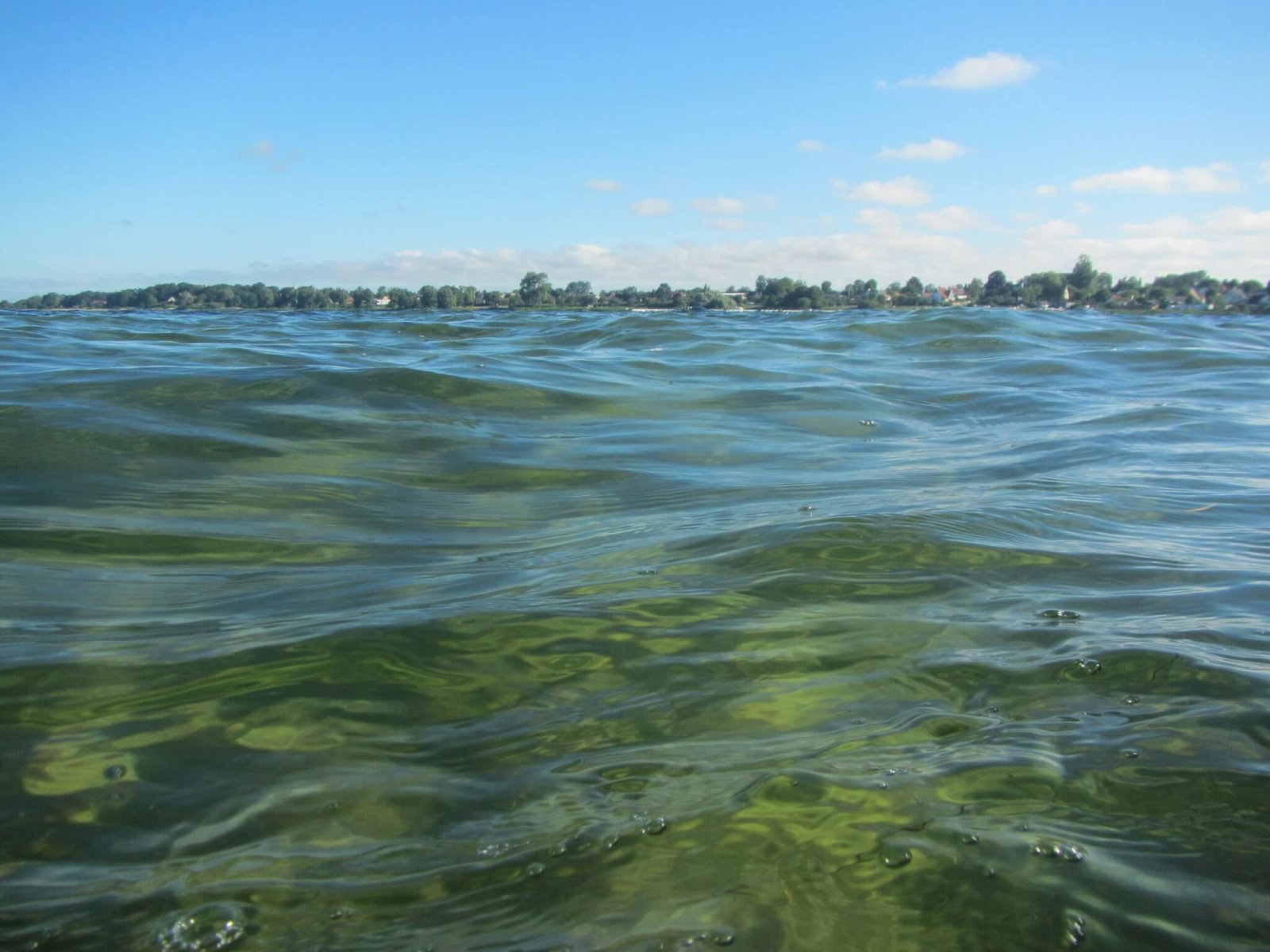
Dipping was so beautiful!

Looking at water from water level just makes me so happy.

All the different shades of blue and green; the reflection of the sky but then sometimes the glimpses of the seafloor, the capillary waves…

And how different the colors are depending on the direction relative to the sun you are looking at.

I especially like looking up towards wave crests (and these waves were only very few decimeters high, probably less than three)

But look at all these structures!
They moved the picknick bench!! Plus someone was sitting on it this morning, so I couldn’t take a picture of it…