Recommended reading: Kyle Bartlett’s blog “Teaching for a complex world”!
I love Kyle Bartlett’s relatively new, incredibly thought-provoking blog “Teaching for a complex world“. Totally recommended reading!
I first came across Kyle’s work in a bluesky post, where he presented a heuristic for how to think about different approaches to teaching for sustainability. I read the post in the morning on the bus, and by the evening I had written a blog post applying his heuristic to my own context: The “Teaching about, with, in, through, for Sustainability” framework, which I now use all the time when I talk about teaching sustainability, and it has even become the guiding structure for our MOOC! So I have really appreciated Kyle’s work, and how generously he’s sharing his thoughts, for quite a while now!
The new-ish blog, “Teaching for a complex world“, is technically targeted towards school teachers in music education, because of course you need to address a specific audience rather than trying to write for everybody. Practically, though, it is super relevant for anyone with an interest in teaching for sustainability, and that the examples are from a music classroom works really well for all non-music teachers — in a “if this much can happen in a music classroom, imagine how much could happen in my own!” kind of way. Kyle sees the gap between what needs to happen, the ambition clarified for example in the Agenda 2030, and what is actually happening when it comes to working for sustainability, and takes on a translator role to explain and inspire action. He writes “I remember what it felt like to encounter important ideas without a guide. To sense that something mattered without knowing how the pieces fit together. To wish that someone had laid out a clearer map earlier” (in this post), and he is so good at laying out that map for others. For example, he very clearly describes all those terms that are often used interchangeably but are, in fact, not interchangable: ESD is the toolkit that helps teachers teach how to read the map of the 17 interconnected goals described in the SDGs, which together are supposed to help us navigate the pathway to sustainable development, with the ultimate goal of reaching sustainability (in this post).
Right now, Kyle is going through the 17 SDGs in individual posts, discussing what they actually mean and why they matter. For example, I really love this summary (as part of a much longer post) of the goal “quality education”: “SDG 4 does not hand us one final definition of quality education. It asks us to keep examining what quality should mean in the world our students are inheriting. It asks us to notice who has access, who is excluded, what is being taught, what is being measured, what is being ignored, and what kind of future our classrooms are quietly preparing students to accept — or to imagine differently.” This resonates with me so much! Even though we never met in person and only spoke on a short video call once, reading this blog, it feels like I have found meaningful and important community. I can only recommend that everybody who is interested in teaching for sustainability checks out “Teaching for a complex world“!
P.S.: Kyle describes his commitment to writing the blog as “I would rather be imperfectly present in the work than perfectly absent from it” (in this post), which I love and believe is such a good general motto in life*. The process is the point.
*but also recognize and appreciate the emotional labor that this attitude requires!
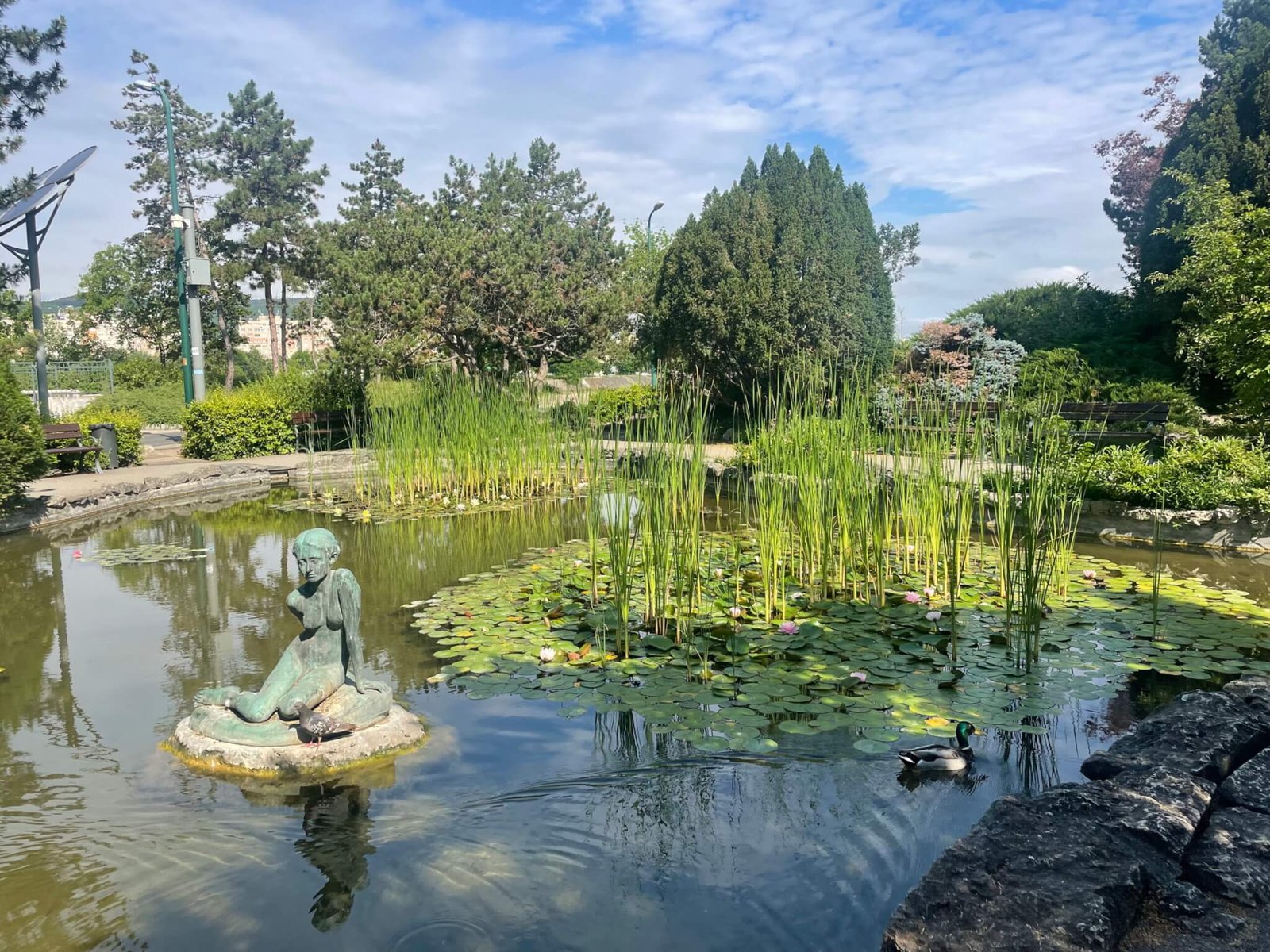
Featured image from the Japanese garden on Margarete island in Budapest.
How cool is it with the reflections, the waves, the duck, the fish?
More of the pretty surroundings — ignore the weird masts and focus on the waves and water lilies!