Tag: double-diffusive mixing

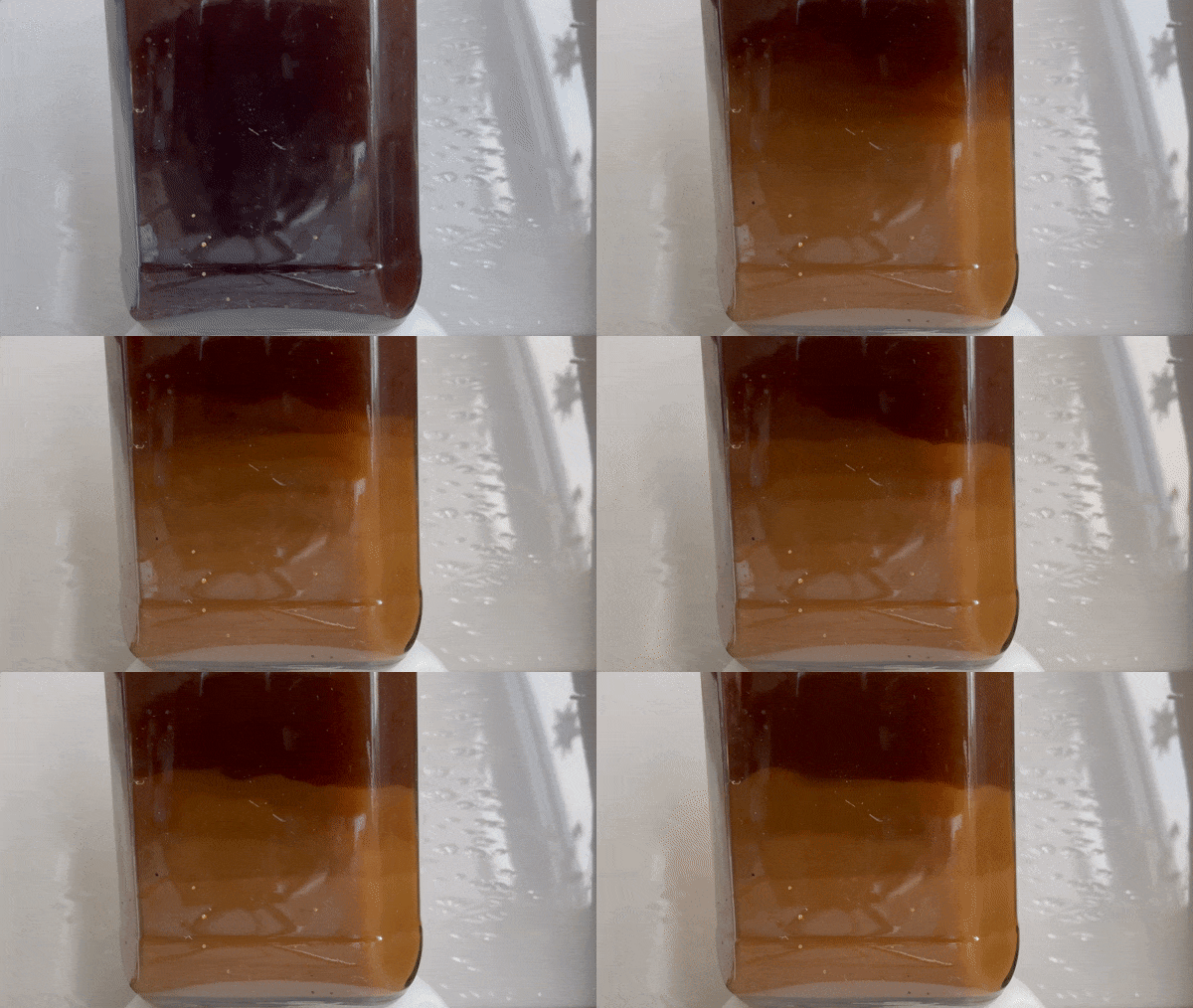
Diffusive layering — a super easy experiment!
Day 17 of my 24 days of #KitchenOceanography is about double-diffusive layering, and the post is using “go have a nice latte” as instructions. However, in times of Covid-19 (and a hard lockdown in Germany since Wednesday) that’s unfortunately impossible. And since Lars Henrik said that he was especially curious about this experiment, and today […]
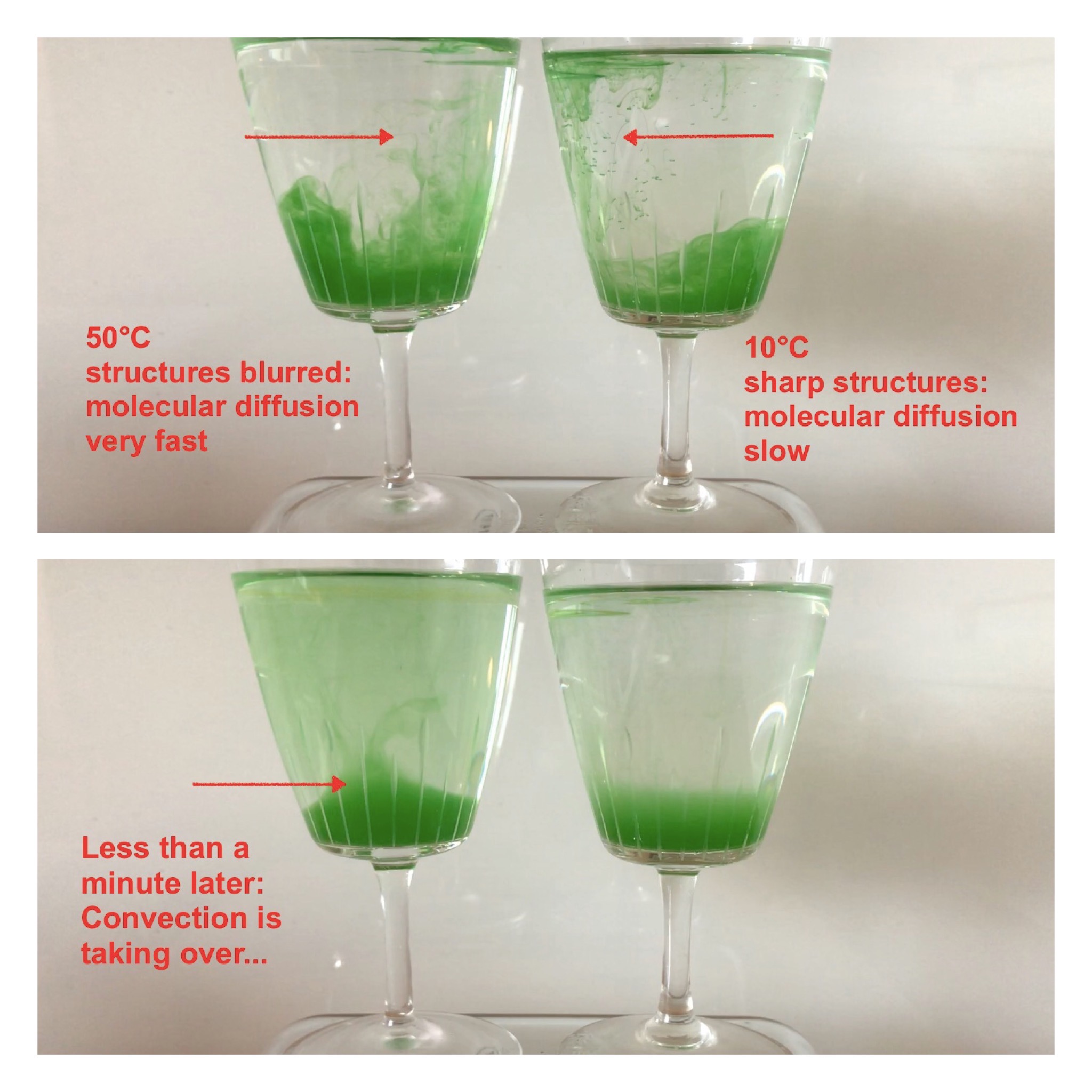
Temperature dependency of molecular diffusion, and convection taking over
I saw the idea for this experiment on Instagram (Max is presenting it for @glaeserneslabor) and had to try it, too! The idea is to put drops of dye into hot and cold water and observe how in hot water the dye is mixed a lot faster than in cold water — after all, molecules […]
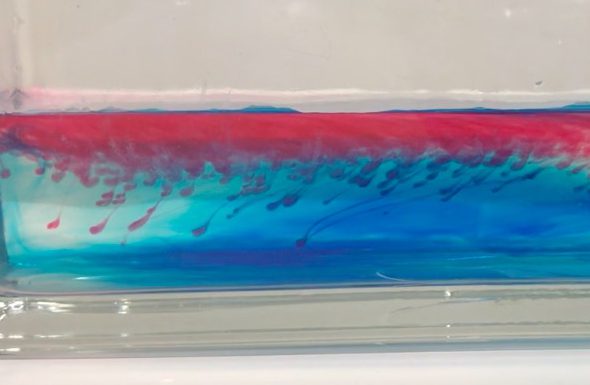
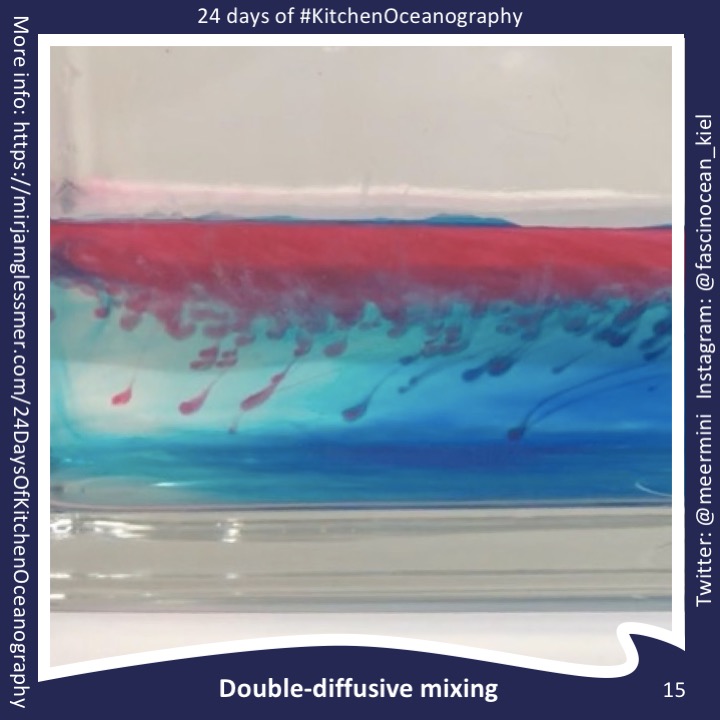
Salt fingers in my overturning experiment
You might have noticed them in yesterday’s thermally driven overturning video: salt fingers! In the image below you see them developing in the far left: Little red dye plumes moving down into the clear water. But wait, where is the salt? In this case, the “double” in double diffusion comes from heat and dye which […]
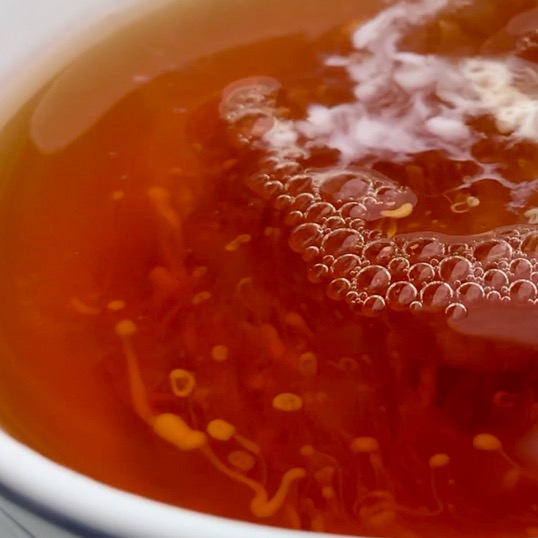
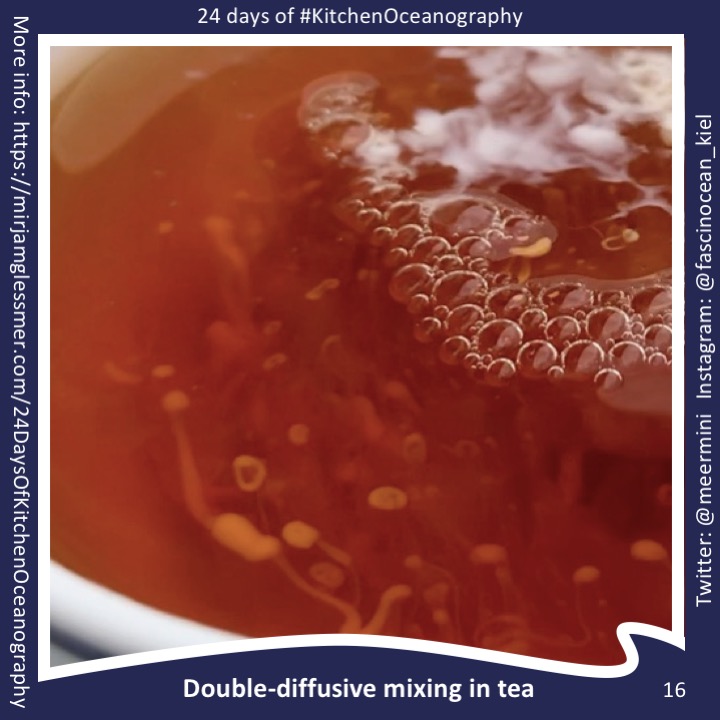
Ostfriesentee — Double diffusion in a tea cup
Showing double-diffusive mixing in tank experiments is a pain if you try to do it the proper way with carefully measured temperatures and salinities. It is, however, super simple, if you go for the quick and dirty route: Cream in tea! Even easier than the “forget the salt, just add food dye” salt fingering experiment […]
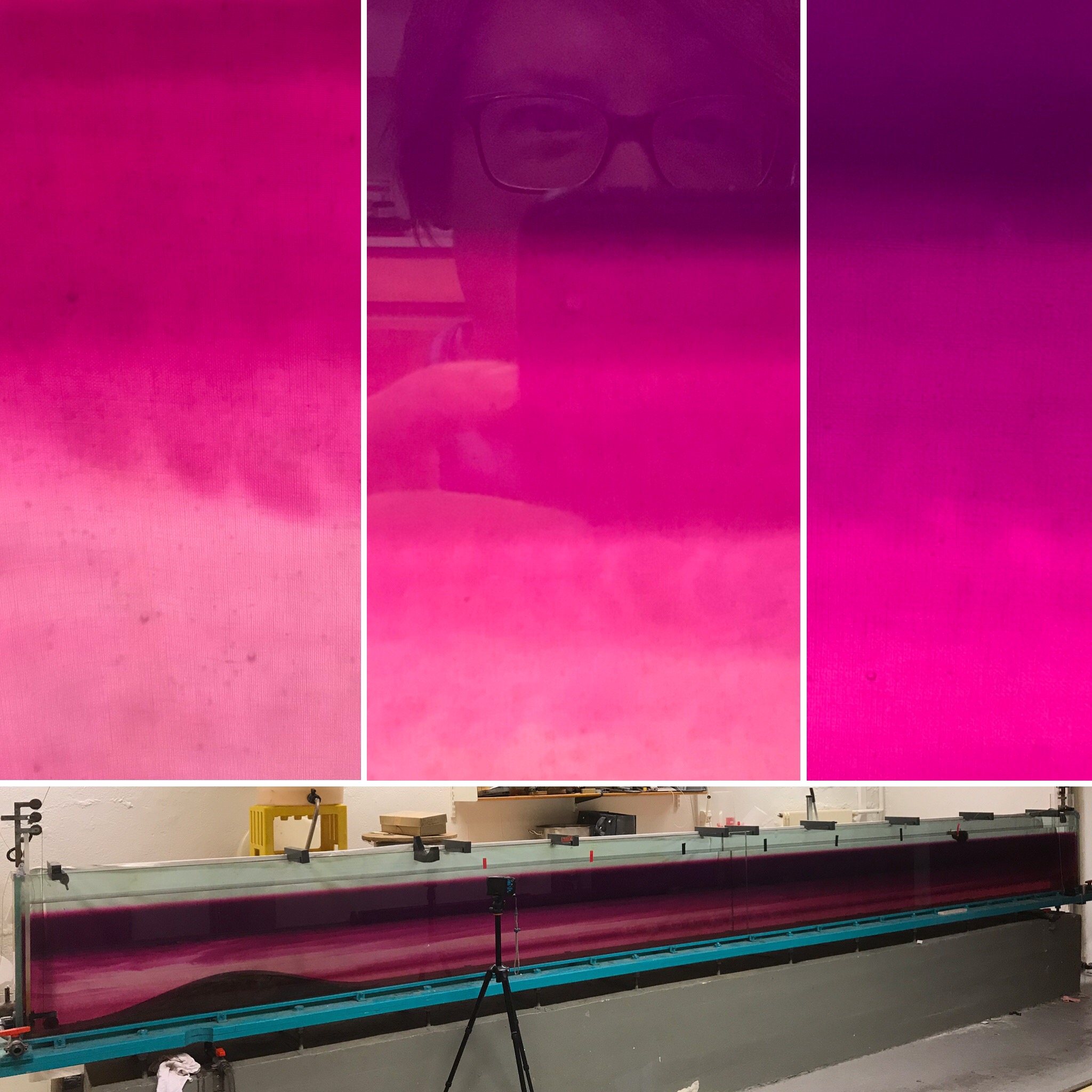
Accidental double-diffusive mixing
When setting up the stratification for the Nansen “dead water” demo (that we’ll show later today, and until then I am not allowed to share any videos, sorry!), I went into a meeting after filling in layer 4 (the then lowest). When I came back, I wanted to fill in layer 5 as the new […]
Layered latte: A great real-life example of double-diffusive mixing!
Sometimes sitting in a café for a work meeting with #lieblingskollegin Julia can lead to unexpected discoveries of oceanographic processes — in my latte! It’s those little things that inspire blog posts… “Kitchen oceanography” brings the ocean to your house or class room! Oceanography is often taught in a highly theoretical way without much reference to […]
Experiment: Double-diffusive mixing (salt fingering)
On the coolest process in oceanography. My favorite oceanographic process, as all of my students and many of my acquaintances know, is double-diffusive mixing. Look at how awesome it is: Double-diffusive mixing happens because heat and salt’s molecular diffusion are very different: Heat diffuses about a factor 100 faster than salt. This can lead to […]
Experiment: Temperature-driven circulation
My favorite experiment. Quick and easy and very impressive way to illustrate the influence of temperature on water densities. This experiment is great if you want to talk about temperature influencing density. Although it doesn’t actually show anything different from a temperature driven overturning experiment, where circulation is determined by hot water rising and cold […]
“Laboratory layered latte” – combining latte and double diffusion. Easily my favourite paper ever!
My friends know me well. Especially A&I, which was proven again when they sent me the link to an article about two things that I am mildly obsessed with: Latte and double-diffusive mixing. My obsession with latte is a fairly recent thing, but I have been known to blog about interesting convection pattern in it […]
Double the trouble — a poem about double-diffusive mixing in the ocean
On my blog’s fourth Birthday (!!!), it’s time to try something new. How about some celebratory oceanographic poetry? Obviously the topic has to be my oceanic pet process, double-diffusive mixing… Double the trouble Heat mixes by molecules bumping into each other and clunking momentum transfers so fast it all blurs the warmer the faster […]
I am missing institute seminars! Or: Why we should talk to people who use different methods
You probably know that I have recently changed my research focus quite dramatically, from physical oceanography to science communication research. What that means is that I am a total newbie (well, not total any more, but still on a very steep learning curve), and that I really appreciate listening to talks from a broad range of […]
My favorite demonstration of the coolest mixing process: Salt fingering!
I am updating many of my old posts on experiments and combining multiple posts on the same topic to come up with a state-of-the-art post, so you can always find the best materials on here. And today I would like to present you my favorite experiment: Salt fingering! Check out the new page I made for […]
Salt fingering – DIY
How to easily set up the stratification for the salt fingering process. Setting up stratifications in tanks is a pain. Of course there are sophisticated methods, but when you want to just quickly set something up in class (or in your own kitchen) you don’t necessarily want to go through the whole hassle of a […]
Diffusive layering. Or: This is not a trick question!
The “other” double-diffusive mixing process. After having talked extensively about double diffusive mixing in my courses, I tend to assume that students not only remember that there is such thing as double-diffusive mixing, but that they also remember our discussions on how the process works, and that they would be able to transfer this to processes […]
Salt fingering
How to show my favorite oceanographic process in class, and why. As I mentioned in this post, I have used double-diffusive mixing extensively in my teaching. For several reasons: Firstly, I think that the process is just really cool (watch the movie in this post and tell me that it isn’t!!!) and that the experiments […]
Double-diffusive mixing
On the coolest process in oceanography. My favorite oceanographic process, as all of my students and many of my acquaintances know, is double-diffusive mixing. Look at how awesome it is: Double-diffusive mixing happens because heat and salt’s molecular diffusion are very different: Heat diffuses about a factor 100 faster than salt. This can lead to […]


