Currently reading about micro opportunities for learning
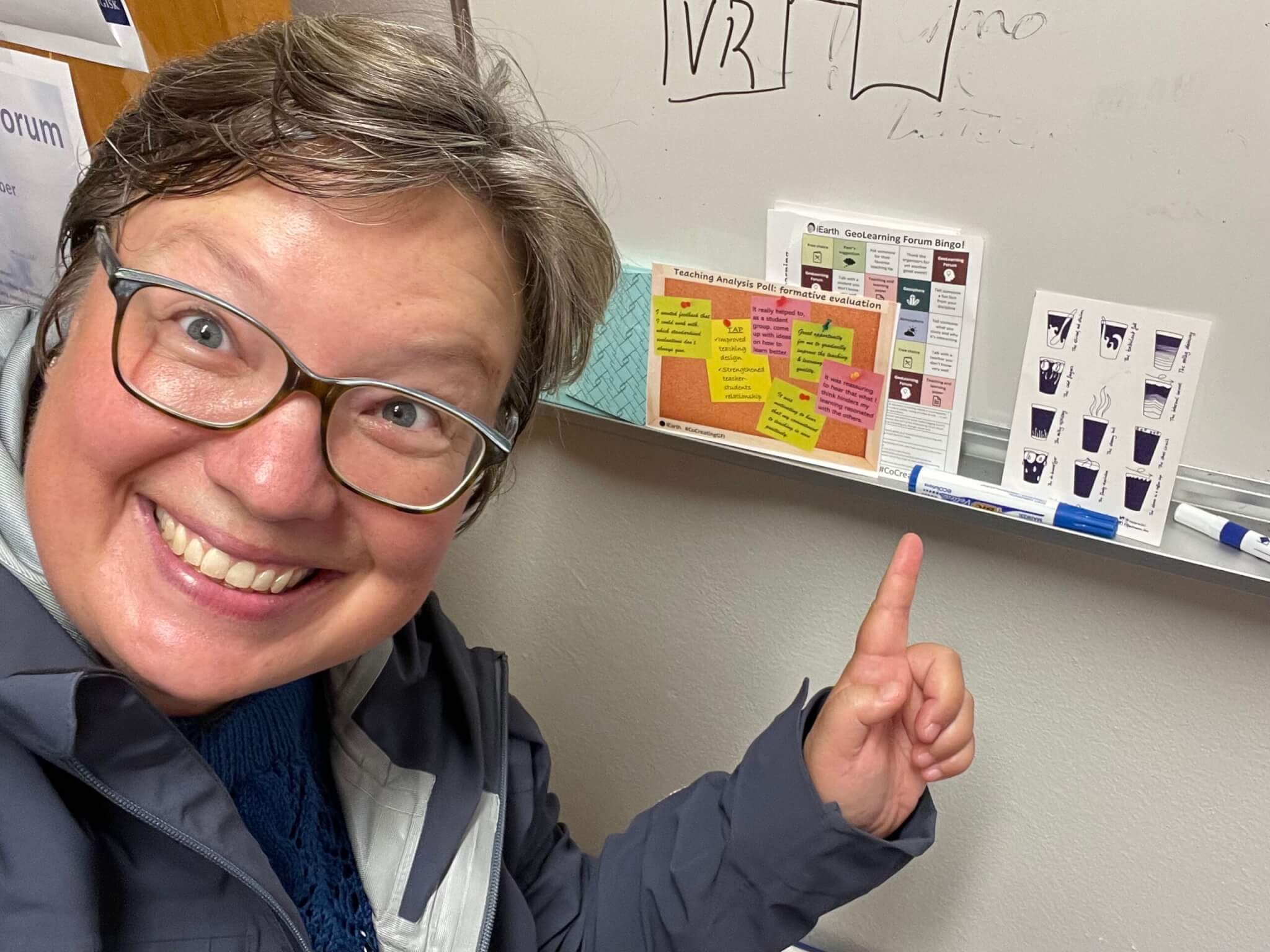
I’ve dabbled in this when I was working with science communication, but now in the context of developing our MOOC, I am interested again in how we can utilize micro-opportunities for learning — commute times, waiting in a doctor’s office, even bathroom breaks. There are so many times when people are on their phones and could theoretically be engaging with our content! I tend to think about using micro-opportunities in terms of social media (for example back when my wave watching Insta was active), but of course we have also explored postcards with SoTL content (actually, many of them are double use: I try to include a summary graphic when I publish new articles), and others. But now let’s see what the literature says!
Boumalek et al. (2025) did a systematic literature review on “micro-learning design and micro-course structuring“. They point out that today’s learners are different from learners just a short while ago, not least due to their access to smartphones (and possibly related addictions and attention spans, and being used to content designed to captivate attention). Micro-learning, i.e. short, focused bursts of learning, is a promising way to engage such learners in a personalized and flexible way, using micro media (e.g. videos, podcasts, infographics, quizzes, assignments, surveys, simulations, games, animations, demos, posts), which are “concise media elements designed to convey information quickly and effectively“, tailored for use on a specific platform. If it is delivered online, it also “accommodates learners’ preferred schedules and locations“.
(I also read another article where they give a nice motivation for micro learning: “The need for self-directed learning for professional development drives an increase in the delivery of easy to use ‘just-in-time’ resources that respond to the often-dynamic workplace and work culture” (Arnab et al, 2021). In that article, the focus on micro (<15 min) games, which I thought sounded super mysterious until I found a list of the type of games they mean: drag-and-drop (fill in the blank), drag-and-drop (word cluster), MCQ quiz, animated target-and-swipe, comic book, and video scenarios. Much less exciting than what I had imagined!)
((And in a web search of micro learning, I saw that the app “Blinkist”‘s tag line is “replace doomscrolling now“, which I find quite an interesting angle!))
Core phases of micro-learning production
Boumalek et al. (2025) present the core phases that appear across their literature review, that I compiled here:
Planning / pre-production
Before planning too much, and definitely before producing anything, it makes sense to identify who the learners are going to be and what their needs are. This is also the phase to set clear (and measurable) learning objectives, identify core concepts, break content down into learning units, and structure content (using tools like concept maps or outlines; helpful both for creators and learners). Then, it comes to scripting content and creating tasks and worksheets etc, to “ensure smooth transitions between sections” for cohesive learning experience, and to have a look at everything again to avoid cognitive overload and to keep learner attention focused.
Design and Engagement Strategies
Once we’ve done the planning and pre-production, it’s time to choose instructional strategies aligned with learning objectives, to apply design principles. Now one can also integrate story-telling and/or narration, and relatable, practical examples for emotional connection and better retention. Now is also the time to design the formative assessment, for example reflection prompts, quizzes, and mini-tasks.
According to Boumalek et al. (2025), “[e]ffective microlearning design depends on brevity, clarity, and focused content, delivered in small, bite-sized units that support comprehension and fit into learners’ busy schedules.” Therefore, they recommend varied media to accommodate different learning preferences (videos, slide shows, reflection questions, …) and “sound pedagogical strategies like repetition, constructivism, and connectivity“.
Some recommended learner engagement strategies include keeping units really small (“bite-sized” content), leveraging personalized learning paths (which I have seem very successfully implemented in TryHackMe or, in a very different way, in the Contemporary Approaches to University Teaching MOOC), “fostering collaboration through peer teaching“, MCQs for assessment, direct feedback through success scores, game elements like challenges and rewards (I am personally addicted to Duolingo’s “streak”), varied voices and styles (guest presenters), and mnemonic techniques (i.e. memory aids like acronyms, rhymes, stories).
Micro-Media Production
This is the content-recording and production phase, then fine-tuning, editing, and adding effects and narration (and, I am assuming, subtitles and ALT texts)…
Presentation and Delivery
To mitigate some of the risks associated with micro-learning, for example that units don’t fit together or that learners get confused trying to navigate, presentation and delivery depend on clear titles and descriptions (“navigational cues for learners“), consistent keywords, reinforced key concepts, organized (category / tag) content by themes, topics, objectives; in a nutshell: simple navigation.
So far, so good! Next article:
Bothe et al. (2019) have a slightly different goal than mine. They want to close the gap in mobile learning by making all materials of a MOOC also available in micro format (their micro is up to 15 minutes), and those micro resources should be navigate-able in personalized, non-linear pathways on an app. To create the micro learning opportunities, they say that “[w]hen bringing micro learning to the MOOC experience, existing content should be reused“, and they work with automated segmentation suggestions to do that.
One warning against phone use saying that learners are likely to get distracted by notifications from other apps, but that might also happen on desktops, because you would likely still have your phone close by, and also these days also desktop apps have notifications about all kinds of stuff, so either you have learned that you can switch off notifications, or that will be equally as distracting in both settings?
They cite a study that found that users who combine mobile and desktop learning do better than those that use only one of those (Rohloff et al., 2018), but I did not follow up with the original source.
Speaking of Duolingo (a couple of paragraphs ago): There is a really nice TED talk with Luis von Ahn, one of the co-founders of Duolingo, about how they make Duolingo addictive (the streak), how they use passive-aggressive messages to make people come back to the app (of the type “since these reminders don’t seem to work, this is the last message from Duolingo”), but also how it works to redistribute wealth from people that can affort to buy themselves out of ads (which seems to be the biggest income stream) to people who can use the product for free.
Next paper: Ho et al. (2023) write about “Turning coffee time into teaching moments through bite-sized learning for adult learners“. They describe adult learners are self-directed and intrinsically motivated, and write that “the adult learners’ need to find a learning approach that is flexible and does not require blocks of time to be committed, because they face the same problem of finding long uninterrupted stretches of study time to fit into their schedule“. Therefore, “non-formal learning time is operationalised as the small pockets of time in one’s daytime schedule, such as commute time and coffee break time. By encouraging the utility of non-formal learning time, learning can be maximised, even for busy adult learners“.
Ho et al. (2023) flipped a psychology course by releasing bite-sized materials on a topic 10 days before a session to prime participants. There was some task to complete (which also gave instructors feedback on participants’ prior knowledge etc). “The bite-sized activities required students to consider specified everyday situations or examples before linking them to relevant theories and concepts in cognitive psychology. This inductive approach would enable the instructor to lead learners to a deeper understanding with a process that incorporates insightful learning and the real-life application of concepts.”
They look at different time slots which can be used for bite-sized learning: morning commute + coffee break time, lunch time, coffee break + commute home. The evening and night “was considered non-bite-sized learning time since this is when adult learners are typically free from other commitments and have longer stretches of time to spend on learning activities that require more time to complete, such as reading, completing assignments, and conducting research” (unless they have kids, or other caring responsibilities, or hobbies, or a second job, …).
Overall, Ho et al. (2023) found more in-depth discussions for the bite-sized flipped group than for a control group that got all the input at once at the beginning of the semester.
Jacobs et al. (2024) write “Exploring the Effectiveness of Bite-Sized Learning for Statistics via TikTok”. In their study, they use maximum 60 seconds long videos, produced for TikTok, and students in a treatment group received links to those videos. They find that the treatment group significantly outperformed the control group that did not receive the videos. They write “Our findings indicate that using TikTok as part of a learning intervention was associated with improvements in student performance“. Or, my interpretation, that students learned well from short videos, and possibly also from feeling that the instructor cares because they are sending links to more materials?
So et al. (2018) investigate “Adult learners’ perspectives about microlearning: Implications on the design of bite-sized content”. They stress that “Overall, the ‘currentness’ of information and knowledge characterizes the highly demanded areas of topics for microlearning“, and describe that micro-learning can contribute to the wide and shallow overview of a T-shaped knowledge profile, whereas (e-)learning is better suited for developing deep expertise in a small focus area.
Thinking about activities in the Teaching for Sustainability MOOC we are currently working on, I came across this article by Andersen & Ponti (2014) on “participatory pedagogy in an open educational course“, which is a peer-to-peer model where peers are creating the course content in a connectivist cMOOC (in contrast to a content-based xMOOC). And I definitely think that this can also serve as inspiration for our micro learning opportunities, just in a slightly different way!
Participatory pedagogy is “an approach to learning focusing on student-centered learning, emphasizing the value of enabling learners to be part of creating both content and structure“. One advantage is that learners can add multiple different perspectives that had not been originally included, which is “giving learners the opportunity to position themselves as agents“. Andersen & Ponti (2014) investigate an online learning environment for adults on a programming language, and identify two different processes of interaction between users and organizers:
- problem identification, where users discuss what was difficult for them in the tasks they were given, and what other type of materials or instruction could have been helpful,
- co-creation of tasks, where participants suggest new tasks and develop them together with the instructors
This is definitely interesting to consider also for our MOOC — while we are a bit limited by the platform when it comes to co-creating and co-editing of tasks in real time, we can definitely include prompts and questions that can help us to improve the MOOC over time and where we can use participants’ different viewpoints and experiences to enrich the content that we are preparing ourselves.
Now that I read that article, I am reminded of another tab that I have had opened on my computer for way too long: Jenkins (2009) on “Confronting the challenges of participatory culture: Media education for the 21st century“. While most of it is not relevant for my specific MOOC development, but their definition is: “A participatory culture is a culture with relatively low barriers to artistic expression and civic engagement, strong support for creating and sharing creations, and some type of informal mentorship whereby experienced participants pass along knowledge to novices. In a participatory culture, members also believe their contributions matter and feel some degree of social connection with one another (at the least, members care about others’ opinions of what they have created)“. To me, a participatory culture, or “affinity spaces” as others call them, sounds very much related to Communities of Practice, where people can dip their toes in and decide on, and adjust, their level of participation over time, joining a community on a shared domain and with a shared practice… But maybe participatory pedagogy / culture are good keywords to look out for in the future!
All of the above together with one of my favourite podcasts, Speaking of Higher Ed: Conversations on Teaching and Learning, and their episode on Open Educational Resources (OER) where they talk about “disposable assessment” — assessment that is done only to be assessed, not used, or reused, or remixed, so not something that actually has an impact later, I think we should definitely include micro opportunities where we ask participants to create and share something, both within the MOOC, but also on their social media or in their networks or wherever else they are comfortable sharing!
And that’s it for today!
Andersen, R., & Ponti, M. (2014). Participatory pedagogy in an open educational course: challenges and opportunities. Distance education, 35(2), 234-249.
Arnab, S., Walaszczyk, L., Lewis, M., Kernaghan-Andrews, S., Loizou, M., Masters, A., … & Clarke, S. (2021). Designing mini-games as micro-learning resources for professional development in multi-cultural organisations. Electronic Journal of eLearning, 19(2), 44-58. https://pure.coventry.ac.uk/ws/portalfiles/portal/41473082/Binder2.pdf
Bothe, M., Renz, J., Rohloff, T., & Meinel, C. (2019, April). From MOOCs to micro learning activities. In 2019 IEEE Global Engineering Education Conference (EDUCON) (pp. 280-288). IEEE.
Boumalek, K., Bakki, A., El Mezouary, A., Hmedna, B., & Eddahibi, M. (2025). Micro-learning design and micro-course structuring: a systematic literature review. Interactive Learning Environments, 1-27.
Ho, Y. Y., Yeo, E. Y., & Wijaya, D. S. B. M. (2023). Turning coffee time into teaching moments through bite-sized learning for adult learners. The Journal of Continuing Higher Education, 71(2), 183-198.
So, H. J., Roh, S. Z., Oh, J. E., Lee, H., Lee, J., & Ji, S. (2018). Adult learners’ perspectives about microlearning: implications on the design of bite-sized content. In 26th International Conference on Computers in Education, ICCE 2018 (pp. 488–493). Asia-Pacific Society for Computers in Education.
Jacobs, A., Pan, Y. C., & Ho, Y. C. (2024). Exploring the Effectiveness of Bite-Sized Learning for Statistics via TikTok. International Journal of E-Learning & Distance Education/Revue internationale du e-learning et la formation à distance, 39(2).
Jenkins, H. (2009). Confronting the challenges of participatory culture: Media education for the 21st century (p. 145). The MIT press.
Featured image: Found some of our older postcards in someone else’s office in Oslo! :-D


