Published! “STEM Students Prefer Assessment Practices Known to Reduce the Impact of Test Anxiety” by Costello et al. (2025)
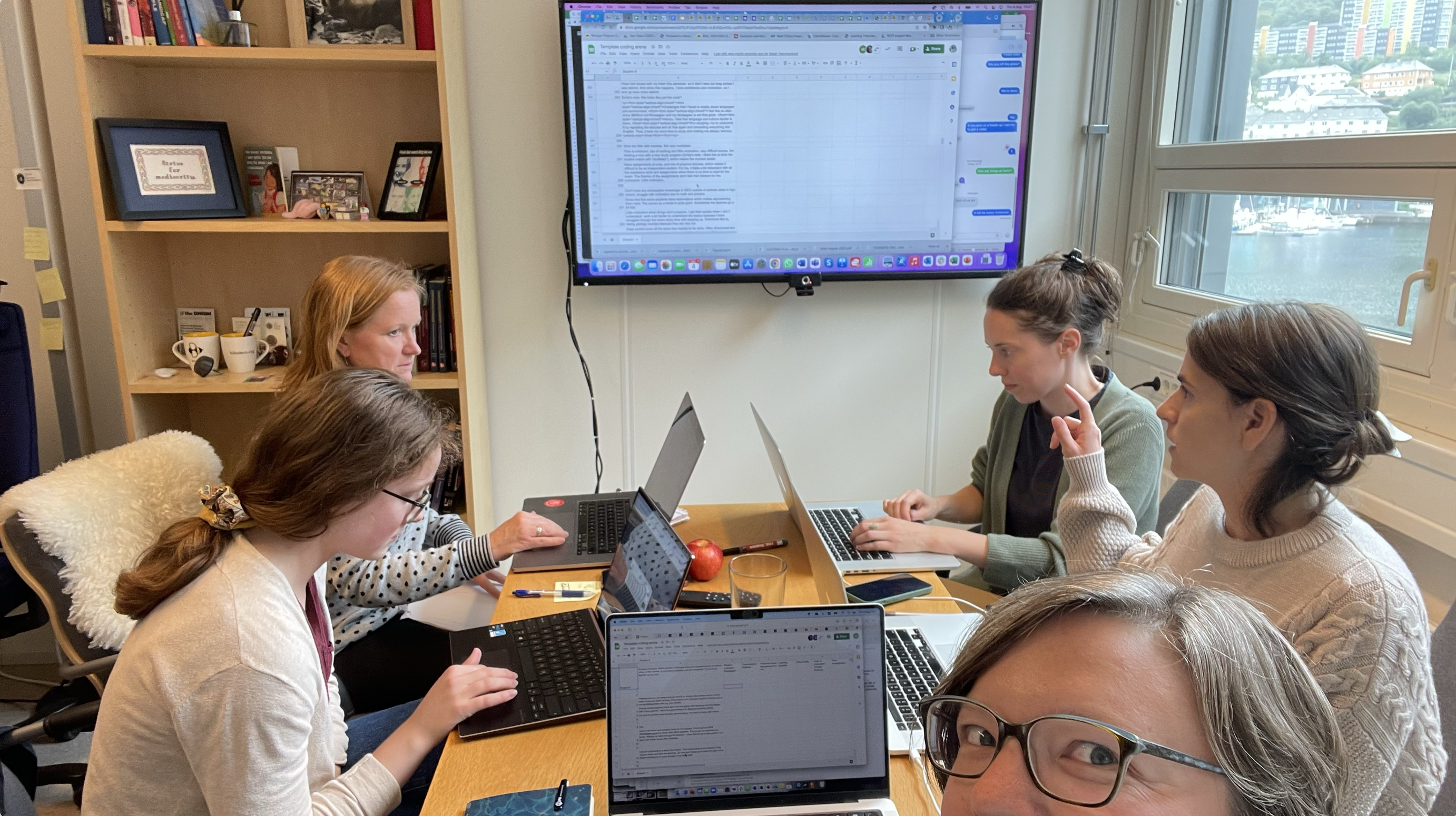
Back in 2022, I worked on a really cool study on belonging and test anxiety together with the awesome colleagues you see in the featured image: aside from me taking the selfie, from left to right there are Emily Christiansen, Sehoya Cotner, Sarah Hammarlund, and Robin Costello working on coding responses (missing only Kate Kiani and Cissy Ballen in that picture). And now it is finally out!
In a nutshell, we find that students with higher test anxiety perform worse, and that higher test anxiety correlates with being the first in your family to go to university. Students with higher test anxiety ask for more frequent and less high-stakes examination methods to reduce (the impact of) test anxiety. That is also what is generally recommended to teachers, but seeing how test anxiety is unevenly distributed, that makes it an even stronger argument to use assessment methods that contribute to an equitable learning environment.
Read the article here:
Costello, R.A., S.P. Hammarlund, E.M. Christiansen, M.K. Kiani, M.S. Glessmer, S. Cotner, and C.J. Ballen. 2025. “STEM Students Prefer Assessment Practices Known to Reduce the Impact of Test Anxiety”. Nordic Journal of STEM Education 9 (1):43-65. https://doi.org/10.5324/njsteme.v9i1.5892
Share this post via


Currently reading Mottershaw (2026) on “Class in session: discussing social class in the university classroom” - Adventures in Oceanography and Teaching says:
[…] performance, but at the same time most people know that it is not. In my own work we have looked at first-generation students, students whose parents have not been in higher education, and I have talked with many people about […]