Rethinking certification and traces of learning in our MOOC
Initially, we were very excited to have the opportunity to produce a MOOC to be run on one of the biggest course platforms in the world — to gain visibility and status through being hosted there, to be able to use a platform that handles participant accounts and automated certification through quizzes and rubric-based peer-assessment, having access to integrated features like quizzes and discussion boards. It all just seemed awesome, and in a chapter we submitted only a month ago, we still describe how formative and summative feedback will act together in our MOOC.
But something changed for me a couple of days ago when I watched a screencast of a person using an AI agent to find and respond to an uncompleted test on Canvas (the Learning Management System (LMS) that we use in my work). Of course, it has always been possible to cheat on assessment, and especially in asynchronous online settings we have never had any idea who actually takes a test. But now with this type of videos all over social media, my prediction is that the automated certifications the way we currently do them will become absolutely worthless, and then things can go one of two ways: Either we get super strict with proctoring and surveillance to be able to keep giving out certifications (which I don’t think is a good solution and I do not want to be involved in), or we give up on assessment as we know it for these kinds of courses. What could the latter look like?
For me, the question here is what we wanted the certification for in the first place. For our MOOC, the certification can serve several purposes: For teachers at LU, we had initially considered that obtaining the certificate might eventually check the box that someone has done individual study to qualify for the second half of a course, where we build on the learning (but that was only one way to tick that box, the other and preferred way would be to work through the MOOC with us in a flipped way). Additionally, and also for external participants in the MOOC, the certificate might be motivating (the way I also collect certificates), and teachers might want to use it as evidence of professional development in hiring and promotion processes, in teaching portfolios, etc.. So how can we create something else that is at least equally motivating AND better shows their learning?
I wrote yesterday about the idea already: a portfolio in which participants show “traces of learning” as evidence of knowledge, skills, competences they have acquired, and which participants can assess against criteria in a rubric that we provide. The portfolio should be meaningful in itself, both because it is a collection of products that participants can use for their own teaching, but also because it is fun to reflect on your own learning over time and see it documented. So how do we set up the portfolio then?
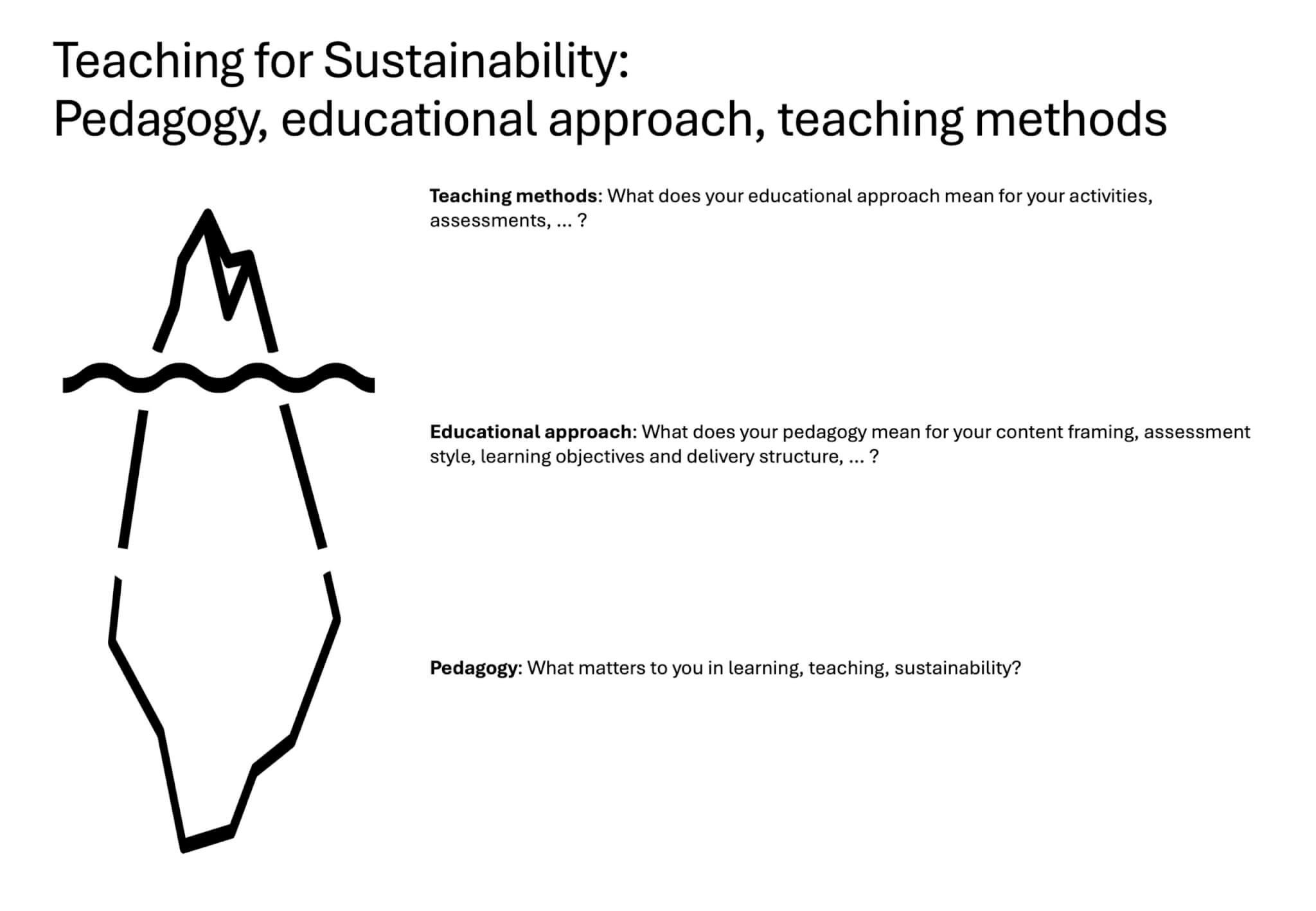
Right now, the idea is that, in addition to an intro and a wrap-up module, we have five modules, one on each of the “about, with, in, through, for“. In each of the modules, we have different kind of activities, e.g. handouts for structured note-taking and brainstorming (see one example in the image below), reflection prompts, transfer tasks. Many of those are already resulting in products that participants can share with us, with their personal and professional network, or even on social media. And for the products, there are also rubrics with criteria to indicate what we are hoping to see. But right now, all of these are small modules that can be collected in a portfolio but don’t tell a story yet. Of course, participants can do the work and come up with a story line themselves (and in a way that would also make sense, especially if they want to not only show evidence of learning from our MOOC specifically, but use it in combination with other work they have done in other context), but maybe we can also support telling that story.
One way to do that might be using something like the handout below. The idea is inspired by Sandri (2022), who explains how pedagogy, educational approach and teaching methods are connected in an iceberg, where only the teaching methods are ultimately visible, but are carried by this whole other stuff from beneath. So what if the portfolio was structured around that handout (which they would work on in the “through” module first, bottom-up), to start out describing the lens they use to look at teaching and learning (the pedagogy), what that means for their educational approach, how that is reflected in the teaching methods, and then ultimately give examples of activities and content they developed in the MOOC? That would definitely something that I would enjoy writing and reading!
And I think that it can be really useful to tie together all the learning from within the MOOC in such a way, too, both to be able to show it to others, but also because it requires integrating the modules into a coherent picture also for the participants themselves, thus further contributing to their learning, especially if they also work with our rubric for what we would consider a good or excellent portfolio.
One aspect that we are losing by moving away from a LMS and onto an open website is that the threshold to contributing to discussions becomes higher when they happen for the whole world to see instead of only for a smaller group of registered users. And then if discussions aren’t mandatory for certification, it is quite likely that participants won’t bother commenting. But I think that is not a problem since we have been planning the MOOC with a “facilitator track” from the beginning: The idea has always been that we provide our materials, but that we want to encourage and support others to facilitate a flipped MOOC based on those materials. And many of the suggested tasks include conversations already; for example we regularly use “inspirational fikas” (fika being the Swedish cultural institution of a coffee break), where teachers talk with other teachers for inspiration and knowledge exchange, and then report back. So even if we “lose” the discussions in a LMS, I don’t know if we are really losing so much, or just removing annoying busywork. And we are losing some functionality like quizzes (but there are tons of wordpress plugins for that, and since we don’t want to track anything anyway, we can easily use those so people can test their understanding).
Another aspect that we are losing by moving away from a LMS are reminder emails that might bring participants back to the MOOC when they have signed up or started. We won’t track progression or anything on our website, but it would be easy enough to offer to subscribe to an email list where we schedule emails to remind participants over the course of a set number of weeks that — according to planned progression — they could look into module x and do task y this week. That would be totally optional, of course.
What we are winning by hosting the MOOC ourselves, though, is a lot of flexibility when it comes to quickly updating something in reaction to current events, or adding new videos or examples or even modules. And we can make it as pretty as we want (check out my coral reef if you haven’t seen it yet! Click on the search button…), and that is exciting!
What are your thoughts on LMS vs hosting on a website? And on certification vs helping participants create direct evidence of their learning? Anything else we should be considering right now?
P.S.: One idea that I just started toying with is that we could facilitate matching “accountability buddies” to take the MOOC together, for people who don’t feel motivated on their own and don’t have anyone they know who would take the MOOC with them. So basically creating cohorts. Maybe with discussions open on social media with a hashtag, or in a closed group somewhere. What do you think?
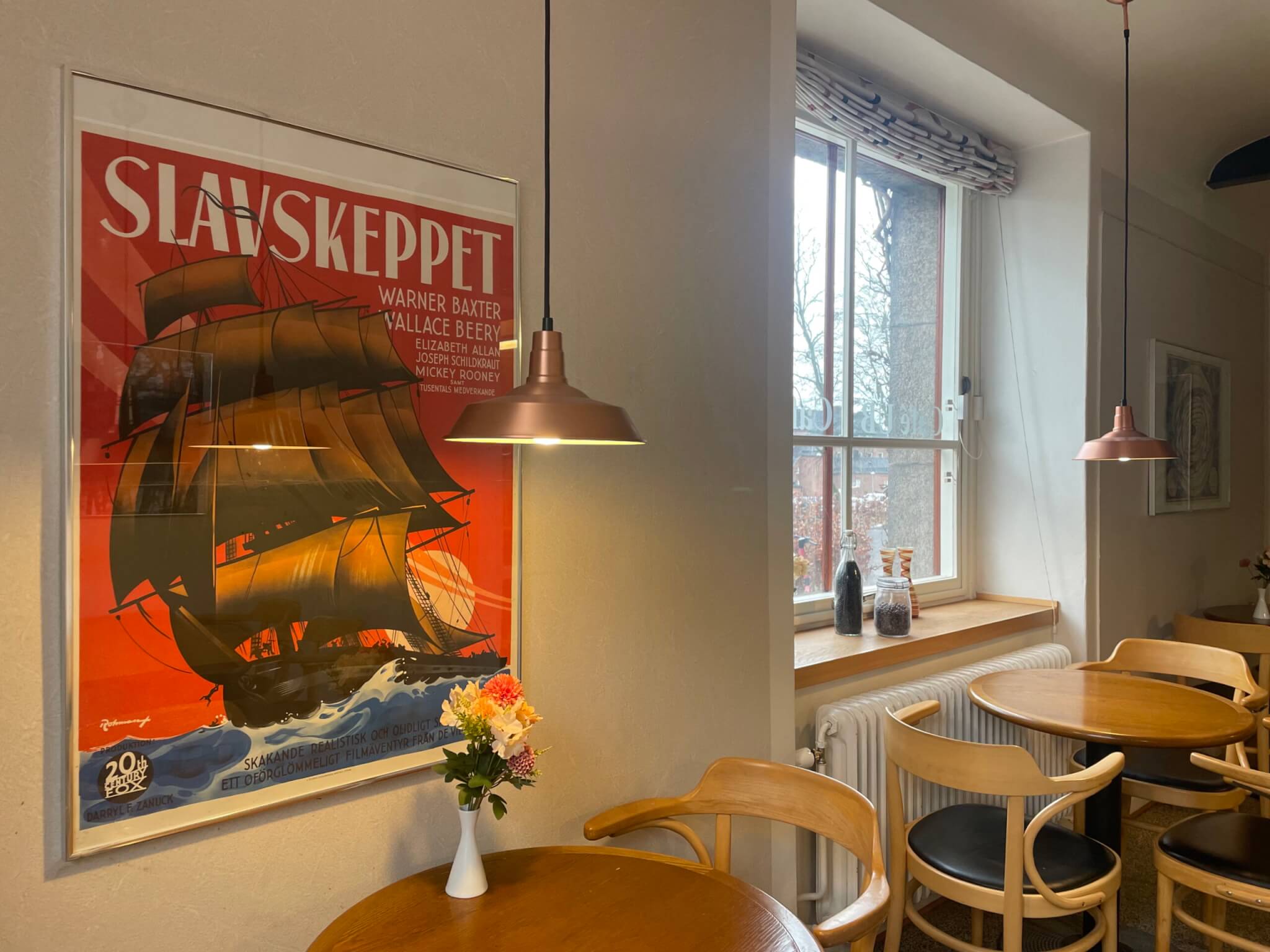
Featured image: Sometimes things are really not the way they seem! This is a photo of one of my favourite “dry” places (because all “water” places are awesome anyway, but some are even though there is no water in sight), and I used to like looking at this poster on the wall (especially, of course, the water part). That is, until I read the title: the slave ship! And then I started noticing the fights on deck and people falling over board and now I am just find it disturbing that I did not notice for so long…


