Currently reading Suter et al. (2026) on “Experimenting for impact: Combining research with advocacy for climate stability”
Suter et al. (2026) argue that given the urgent need for action against climate change (and seeing that pretty much all available research shows that it doesn’t influence researchers’ reputation or credibility to be activists and scientists, those are not excuses!), more people should combine activism with at the same time figuring out what works.
They suggest that generally, the message should be “advocating for evidence-based, high-impact climate actions to meet international climate targets“. The experimentation comes in when we vary the exact content and formulation of the message, the type of message (e.g. giving a talk or posting on social media, and on social media choosing a platform), who the messenger is (for example an influencer informed by a scientist, or the scientist themselves), who the target audience is (e.g. citizens, professionals, investors, consumers, role models; a choice which, of course, is connected also with the message and platform). They say we should primarily target the world’s wealthiest 10%, since they are the by far biggest contributors to climate change (and also, conveniently, likely most people in our bubble).
The measurable outcomes that we could track in order to test which types of interventions work best could be the number of registrations for an event (see also the Shreedhar et al. (2026) article, where they did exactly that) or social media engagement with a relevant post (e.g. shares, likes, comments).
Doing this helps us improve the evidence-based advocacy, which leads to faster climate action (both because more people are doing more advocacy, and because nobody has to wait for results of peer-reviewed study for good practice recommendations when they investigate their advocacy themselves). Additionally, Suter et al. (2026) argue that such field experiments are relatively easy to implement (and they can be as easy as A/B tests, which for example youtube offers for thumbnails already built-in). They refer to List (2011), who gives some tips on how to conduct field experiments, including stressing that while experiments cost money, not doing them also has a cost; and that the fairness argument about how we cannot give one group a better treatment than another is also only valid if we know for sure that one group is being treated better, which will then influence how we treat everybody in the future. Doing climate advocacy combined with these types of experiments might also be easier to implement than other forms of activism: “Compared to some types of activism such as civil disobedience, the psychological hurdle to engage in climate advocacy may be lower and could be particularly interesting for researchers with limited experience in public outreach on climate issues, particularly when drawing on evidence-based sources of recommended actions.” Lastly, through increasing researchers’ self-efficacy and authenticity, “climate advocacy by researchers may not only encourage climate action by the target group but also positively influence future research and researchers’ well-being“.
I really enjoyed reading this opinion piece. They make really good points, and sometimes things can also just be easy. Lots of influencers test which messages their audience react to and then optimize their content — why shouldn’t we all be climate influencers in that way?
List, J. A. (2011). Why economists should conduct field experiments and 14 tips for pulling one off. Journal of Economic perspectives, 25(3), 3-16.
Suter, M., Palacios Haugestad, C. A., Wullenkord, M. C., & Nicholas, K. A. (2026). Experimenting for impact: Combining research with advocacy for climate stability. PLOS Climate, 5(2), e0000837.
A little wave watching: cool to see the surface roughness change where some sea weed is damping out the waves and before there is sufficient fetch for waves to grow again!
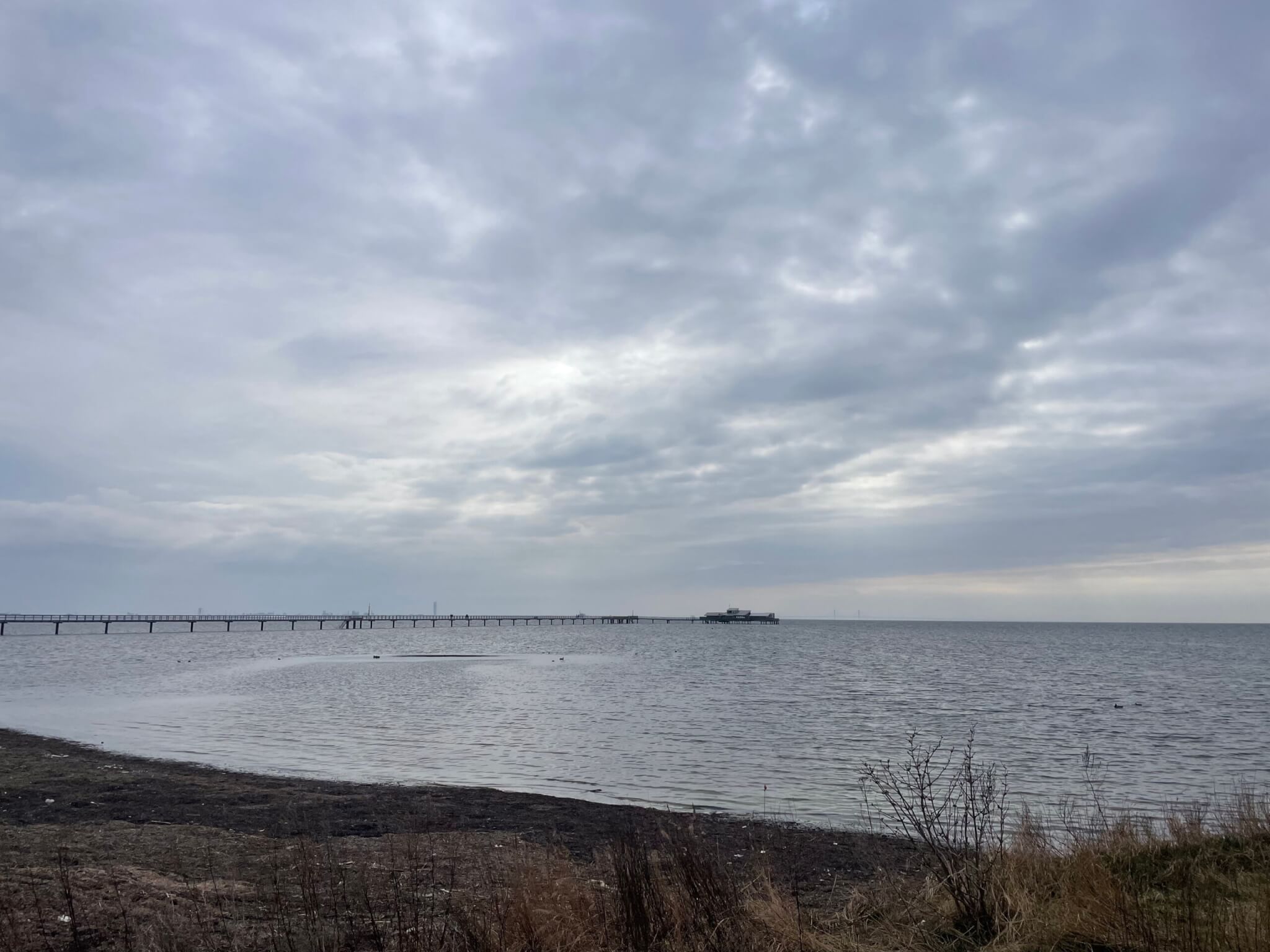
And this place…