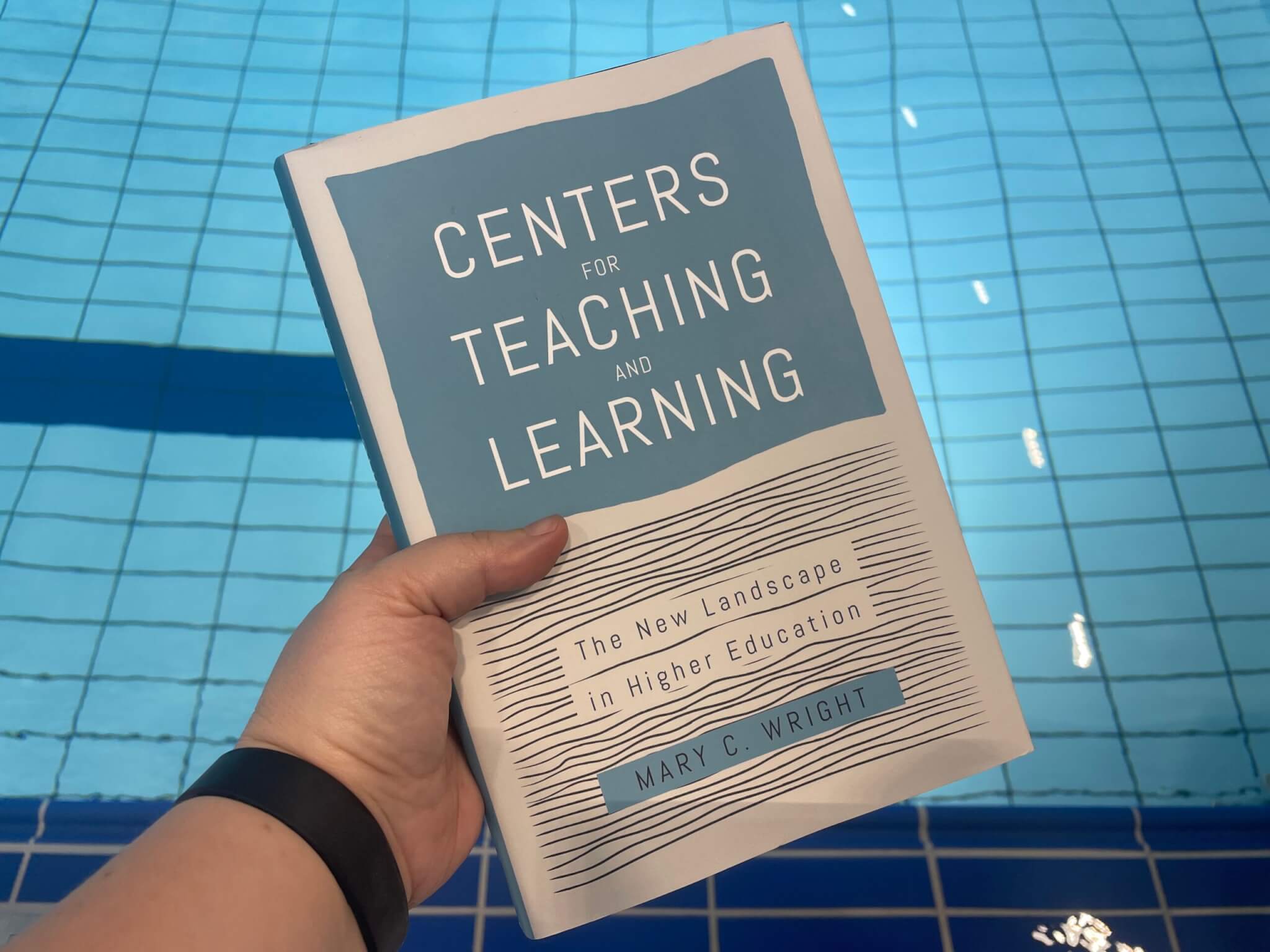
Currently reading Wright (2023): “Centers for teaching and learning: The new landscape in higher education”
Torgny told me to read this, so I did… I only skimmed most of the details of the US landscape of centers for teaching and learning, but I found it really helpful to read about the Hub-Incubator-Temple-Sieve (HITS) framework (short introduction of the four lenses also in the evaluation guide for centers for teaching and learning “defining what matters” by Collins-Brown et al. (2018)); it makes so much sense!
It describes four different approaches to academic development:
- Hub: The most common way to approach academic development is to set the centre up as a “hub”, which is all about bringing people together for connection and collaboration. Wright (2023) describes “there are four key ways that centers express a Hub-related approach: (1) promoting a dialogue and collaboration, (2) playing a coordinating role, and offering centralized (3) programs and (4) campus resources.” Efforts like our LTH Inspiration Conference for teaching and learning fall under this approach, as do attempts to build communities of practice or book clubs.
- Incubator: In an incubator approach, the focus is on individual development and encouragement, often through mentoring programs, consultations, grants, and similar. I have been involved in a lot of work of that kind.
- Temple: In the temple approach, a centre offers “sanctuary and sites for legitimation“. This is the approach that I find the most difficult to grasp, but somehow the “sanctuary and sites for legitimation” really speak to me. This approach is typically operationalized through teaching awards and academies, but I really like the idea of creating a physical space that is open and inviting for teachers to meet and talk about teaching and learning (a bit like our Transformation Thursdays, except with a dedicated physical space. I imagine comfy armchairs and lots of books…). As Wright (2023) points out: a dedicated space “is also representative of a larger vision“
- Sieve: A sieve approach, the second most common out of the four approaches, is about curating evidence-based methods and approaches, to make sure initiatives are aligned with best practices, policies, etc.. This approach is often operationalized through a focus on SoTL, assessment and evaluation, policies and standards, quality assurance. Initially, this did not sound super appealing to me, but I can see how in a way I do use that approach, especially when it comes to GenAI, where I feel that it is important to use my expertise to curate the literature and bring in critical perspectives.
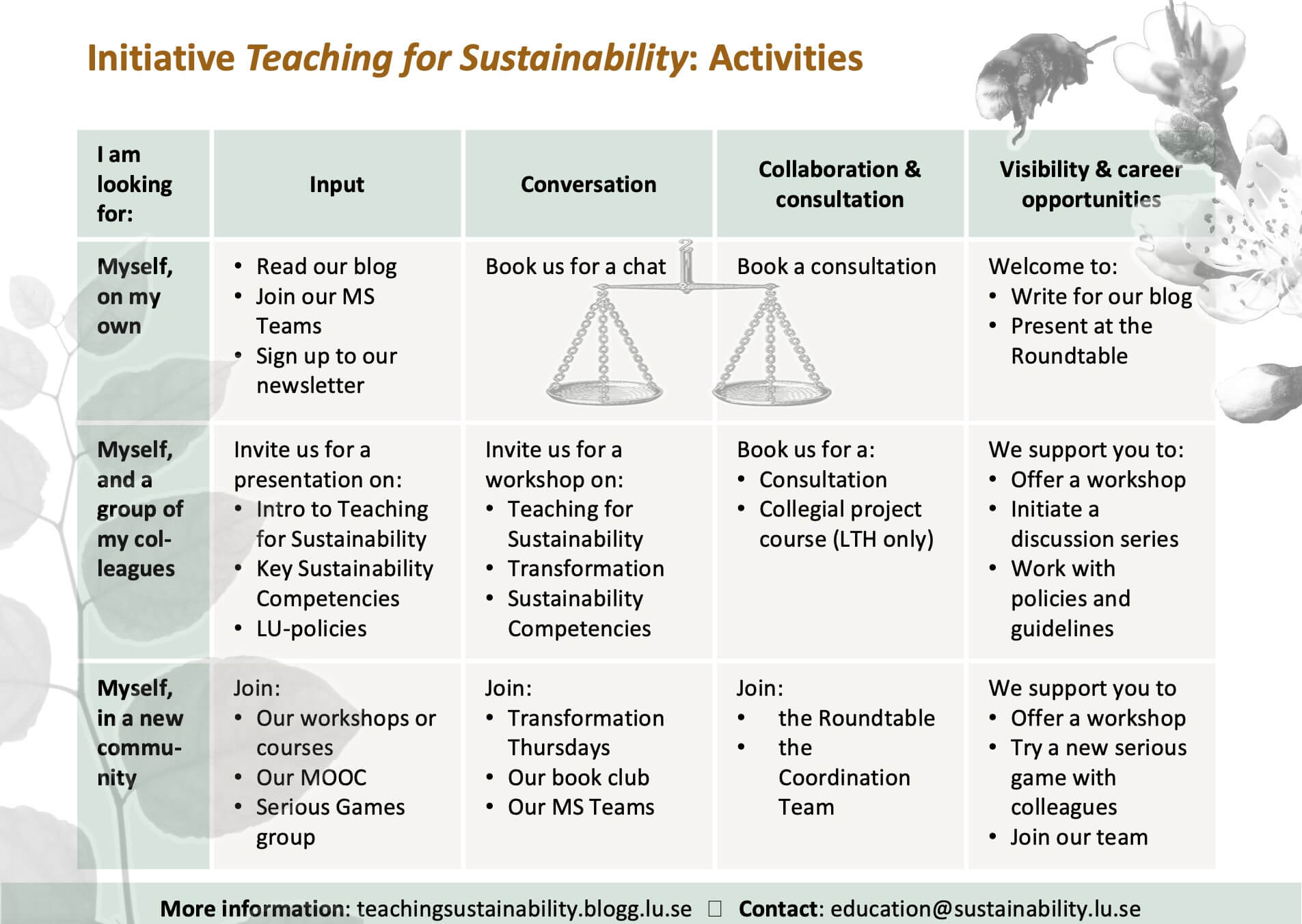
What is interesting about this framework is that you can of course mix and match the different flavours, and in Wright (2023)’s analysis, this is what most centers for teaching and learning do. I can of course not speak for the center I work at, but for our initiative “Teaching for Sustainability”, it is clear that we leverage elements of all four approaches. I would say that we are starting out from a temple idea, creating spaces in which people with a focus on Teaching for Sustainability can meet others who also highly value this. In this, we definitely also act as a hub for like-minded people to connect (also providing resources, for example via our blog), and as a sieve, since we have clear ideas of what is good practice vs “sustainability-washing” (which you see in how our blog is curated). We also do a lot of informal mentoring, thus acting as incubator. Maybe the HITS framework is an interesting way to look at our “menu” of activities (see below) and think about which ones we want to strengthen? The guide “defining what matters” is definitely going to be helpful for that!
Collins-Brown, E., Brown, V. M., Chace, A., Bostwick Flaming, A. L., Frederick, J., Hatcher, M., … & Wright, M. C. (2018). Defining what matters: Guidelines for comprehensive center for teaching and learning (CTL) evaluation.
Wright, M. C. (2023). Centers for teaching and learning: The new landscape in higher education. JHU Press.
Featured image: My reading spot yesterday!


