Currently reading Rizzo et al. (2025) on “Talking with Your Hands: How Hand Gestures Influence Communication”
In a nutshell: “hand movement can boost impact“! And especially if one uses “illustrator” gestures to make content easier to understand, one is perceived as more competent and thus more persuasive.
That’s what Rizzo et al. (2025) found in a huge study where they compared different types of gestures: Illustrators are defined as gestures that “[v]isually represents concrete objects, actions, events, abstract concepts, or metaphorical expressions”, and by providing a visual representation in addition to the spoken word, should make it easier to understand the message. Illustrators are distinguished from “highlighters“, which “highlight or draw attention to what is said, without illustrating it. Placing one’s hands on their head while saying “Oh My God,” for example, or raising a bottle while saying “this water bottle,” serves to emphasize the spoken content or draw attention to the object physically present without illustration” (but: “In contrast, using the bottle to mimic the action of pouring water into a glass while saying “so I filled the glass” would be an illustrator”!), and other gestures without communicative goal, like scratching an itch (unless they scratch that itch while talking about something that might cause an itch, in which case it would become a highlighter).
So what are some examples of those illustrator hand gestures that are apparently so beneficial? Illustrator gestures are as easy as “[m]aking an upward line in the air, for example, while saying “the sales have increased steadily” or tracing the steps of stairs while saying “the steps of success” both use hand movements to create a visual image of the content being discussed“. Other examples given by Rizzo et al. (2025) include a drinking gesture while saying “I was drinking water“, showing a size with two hands while talking about the size of a fish you caught, or showing turning gears while saying “I was trying to remember it“.
And here are some examples of illustrators vs other possible gestures:
- “when saying “the demand is going up and down,” speakers could visually depict a wave motion with their hands (illustrators) rather than raising an index finger to punctuate the statement (highlighter), waving hands without intent (unrelated movement), or remaining still (no movement).“
- “While saying, “just spread it on your face,” for example, the speaker either made a circular motion on the face (Illustrator), pointed to the face (Highlighter), moved their hands without any specific communication goal (Unrelated), or didn’t move their hands (No Movement).“
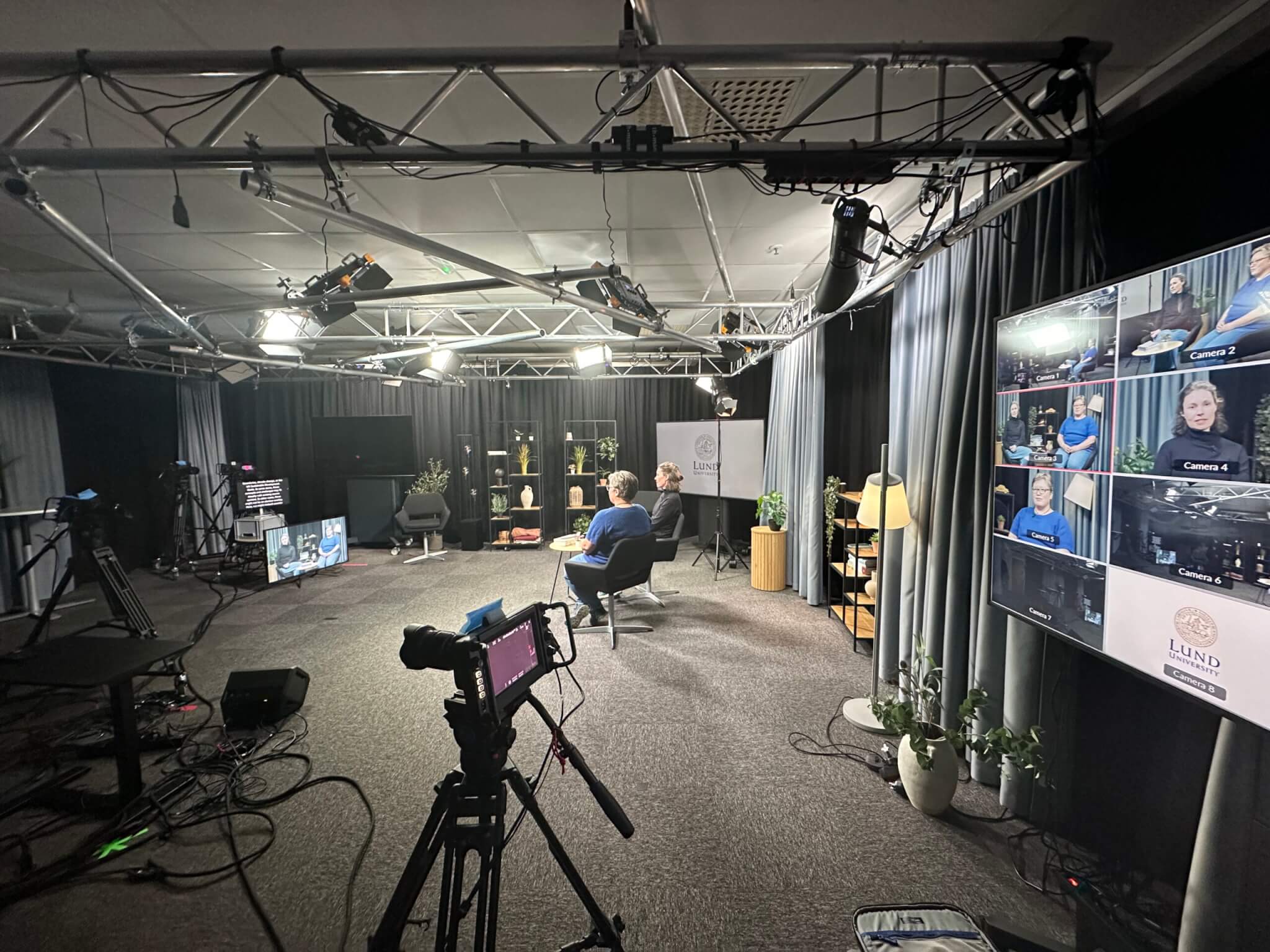
I’m thinking about this because I just watched a test video for our MOOC and clearly I need to figure out what to do with my hands… Because right now, I am not doing anything, and that clearly does not work!
So I looked through the script that we used for that recording and tried to think about what illustrators for different parts might be. For example, “We feel strongly that sharing stories of what teachers have done in their classes can be a powerful motivator for others, and that this MOOC is a chance for all of us to be role models for teaching for sustainability beyond the reach of our own classrooms!” — “strongly” and “powerful motivator” could maybe be done with fists (not in an aggressive way, though?), “sharing” could be the gesture of offering something with open hands, “all of us” could be both hands motioning as if they were bringing something close to me, “beyond the reach” could be one hand gesturing towards something far away. But how would one do “sustainability”? I have no idea… I checked an American Sign Language (ASL) diary on all of those terms because I thought that I could maybe draw inspiration from that, and that partly works (for example for “strong“), but not for sustainability…
Another text snippet is “We use the “Teaching about, with, in, through, and for Sustainability” model to structure this MOOC. The different parts of the model offer different entry points to teaching sustainability…“. “Different parts” and “entry points” should be easy enough, but it would be really cool to figure out how to say “Teaching about, with, in, through, and for Sustainability” with good gestures (and not just crazy eyebrow action…). Maybe ASL can help here?
- “about” is gestured as “Dominant forefinger, which faces non-dominant forefinger in neutral space, moves in a circular motion clockwise before it lands on tip of non-dominant forefinger.“
- “with” is “Two-handed upright “10” hands (handshape) with its palms facing each other (orientation) apart in space (location) moves toward each other together (movement)“
- “in” is “Place the right “&” hand downward into the left “O” hand“
- “through” is “Dominant horizontal flat hand with palm facing left moves through non-dominant upright flat hand between forefinger and middle finger“
- “for” is “Dominant “1” handshape or index finger is in contact with the temple of the head and the palm orientation faces inward. The forefinger moves outward away from the head in an arc motion where the palm orientation faces out“
All of these make a lot of intuitive sense to me without ever having learnt ASL (and even more so when watching the videos rather than reading the description of the movements!), but I think doing all of that might be a liiittle over the top, especially for someone who is usually not gesturing at all and needs to overthink gestures to the extent demonstrated by this blog post… :-D But this was a fun exercise, I am sure the next video will be slightly less bad!
Rizzo, G. L. C., Berger, J., & Zhou, M. (2025). EXPRESS: Talking with Your Hands: How Hand Gestures Influence Communication. Journal of Marketing Research, 00222437251385922.
Featured image by Frankie Schreier: Terese and me filming our test video!


