Currently reading about relational pedagogy, belonging, and engagement
I love it when Christmas text messages from colleagues are recommendations for great papers, thanks, Rachel! :-D
Gilani (2025) does a longitudinal investigation of student sense of belonging which, in contrast to most other belonging studies that typically only capture a snapshot, investigates how belonging develops over time, and what students do to develop it. For this, they look at reflective journals of 39 first-year students, who submitted three or more diary entries over their first year (they were given seven “opportunities” that were free in format, and wrote/recorded/filmed an average of 6.5 entries).
They find that students often enter in either virtuous or vicious spirals: Engagement creates factors of belonging (more connections with peers and staff, awareness of what support is available, good grades, reduced barriers to belonging based on personal identities). This, together with other enablers or barriers, feeds into a sense of belonging, which then supports engagement (better help-seeking behaviours, realising importance of contribution in the classroom, finding peers with shared goals, more passion for the subject, better coping with level and amout of work). This can then lead to even more engagement, supported by other enablers (or possibly hindered by barriers). And this is based on what students describe, so they are aware of these mechanisms!
But Gilani (2025) also identified a second theme: the balance between authenticity and pushing the boundaries of one’s comfort zone. Students talk about this about an alignment between who they are and what they do, and interestingly, a lot of that seems to have been about not attending drinking events and instead finding connections elsewhere. But keep in mind that they are aware that there is the link between engaging in stuff and developing a sense of belonging! And this is also addressed in that students discuss that sometimes they need to push themselves out of their comfort zones, or looking back, that they should maybe have done more.
So what can teachers and institutions do to support a virtuous rather than vicious circle? One very easy intervention could be to talk about the results of this study to help students learn from other students’ experiences and regrets, and Gilani (2025) suggests to couple those with supportive interventions addressing feelings of anxiety (but without putting the whole burden on them and failing to acknowledge potential systematic barriers they might be facing, and that despite their best efforts, not everything is within their control). In addition, there need to be supportive conditions and opportunities in place (for example events for new students that are not focused around drinking), so students don’t end up in a vicious circle where both sense of belonging and engagement decrease and it is getting more and more difficult to reach students… So one of Gilani (2025)’s recommendation is to use learner analytics systems to catch vicious circles as soon as they start (and this might be as low threshold as three emails, according to Carrell & Kurlaender, 2020; or “personal” feedback based on learning analytics data, according to Lim, Arif and Farmer, 2022).
Staying in the theme of what we can do to build relationships that help people feel that they belong, the paper by Su & Wood (2023) discusses “Relational pedagogy in higher education: what might it look like in practice and how do we develop it?“, and, even though it is not in the title, what academic developers specifically can do, as they can shape how other teachers understand and enact relational pedagogy. But let’s start with their definition: “Relational pedagogy can be thought of as an intentional practice whereby classroom learning builds connections and positive relationships for learning purposes“. Su & Wood (2023) recommend that academic developers work to establish a community of practice to have conversations about “best practice”. Within it, academic developers can then suggest and support practical approaches, like making time for one-on-one conversations with students, open door policies, organising activities like conferences and field trips to foster relationship building between students and staff, tutoring or peer mentoring between teachers, and others. But: “Creating such a community of practice requires an institutional commitment at a strategic level“, for example funding of the infrastructure, recognition of participation in workload allocations, professional development opportunities, making learning and teaching a legitimate object of scholarship, and making participation count in promotions. And this is so worth remembering (and it is of course also holds for other, similar initiatives, like for example those on Teaching for Sustainability)…
Lastly, McDonagh & Sanders (2025) explore trust building in academic development, where there might be a perceived power imbalance between the academic developer and the teacher. They start from “a consciously ‘open door’ policy; striving to foster a welcoming environment for all; being responsive; a non-hierarchical attitude; time spent on creating networks that meaningfully support colleagues and open up spaces of belonging; a bespoke approach to mentoring individuals at different levels of experience and expertise; an individualised and person-centred, rather than programmatic, approach; flexibility; a focus on intentional communication; personalisation; active listening and care; resisting (or challenging) assumptions about colleagues’ needs, preferences and levels of confidence; seeing staff as agents of change; meeting people ‘where they are’; and informal ‘micro-moments’ of encouragement (Gannon et al., 2019) which can ‘matter a great deal’ (Felten &
Lambert, 2020, p. 154)“. Sounds great so far! But what does staff working with them think about their experience? There are nine main themes that emerge (listed here without a hierarchy): that there are opportunities for meaningful development, that the teachers feel trusted in the relationship, that the academic developers are the right people in the right place, that teachers feel safe talking with them, that interactions are positive and supportive, that there is genuine, reciprocal collaboration, that teachers feel valued and celebrated as a group and as individuals, that the academic develpers are “real”, and that they show integrity. I find the importance of reciprocity of trust and collaboration as equals especially noteworthy — we need to show trust to build trust (see also Rachel’s and my paper with the “I trust you…” moves…). Earlier today I was thinking about how I should balance my focus on close relationships and collaborations with some teachers with the large number of teachers that I am not working with and don’t have time for, and wondering if I need to scale down on some of the close collaborations. But now I am even more convinced that I should keep showing up for them specifically, and then let them be multipliers to their peers… Thinking in progress, we’ll see.
Gilani, D. (2025). Virtuous or downward spirals–a qualitative exploration of the interconnections between student belonging, engagement, and anxiety over time. Pastoral Care in Education, 1-21.
McDonagh, L., & Sanders, E. C. (2025). ‘You almost feel like you’ve got a friend, somebody who’s backing you up’: exploring the building blocks of trust within a relational pedagogy approach to academic development. International Journal for Academic Development, 30(1), 40-52.
Su, F., & Wood, M. (2023). Relational pedagogy in higher education: what might it look like in practice and how do we develop it?. International Journal for Academic Development, 28(2), 230-233.
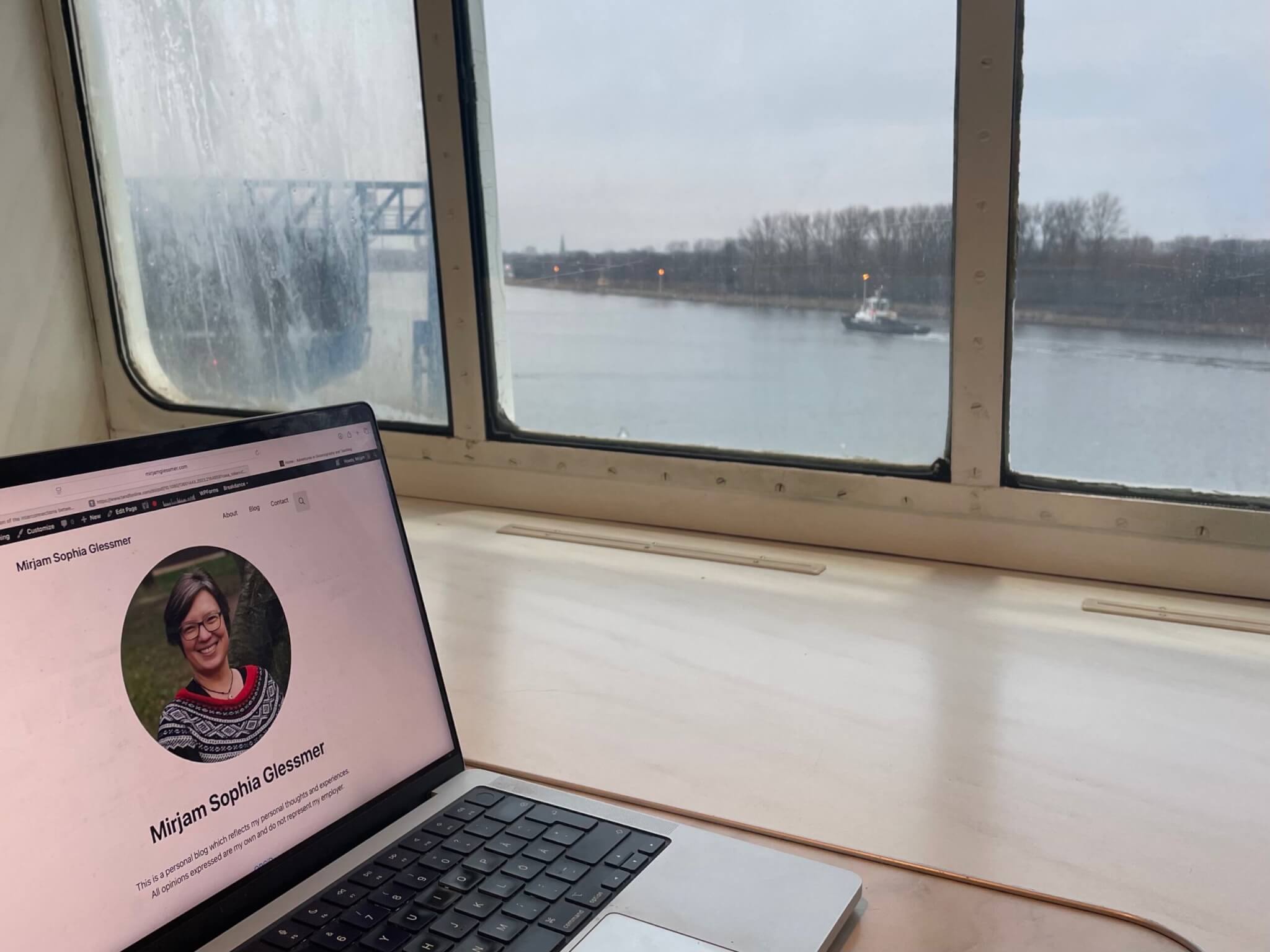
Featured image: the view from my spot for the day on the ferry back to Sweden (currently still docked in Travemünde)


Hendrick MI says:
What does relational pedagogy mean in the context of modern education?